Advertisements
Advertisements
Question
Text Book Keyword
Cuneiform
Advertisements
Solution
It was the wedge-shaped script of the Mesopotamians, written on clay tablets.
RELATED QUESTIONS
The Harappan cities had an elaborate drainage system.
With reference to the engineering skills of the Indus Valley people, explain briefly the features of the Great Bath
Give a brief account of Assembly Hall.
Write True or False against the following statement
Hammurabi built the Hanging Gardens.
Answer the following question in a few sentences.
With what name is the old kingdom of Egypt also known?
Answer the following question in a few sentences.
Mention the contribution of ancient Egyptians.
Answer the following question in a few sentences.
Name the four dynasties that ruled China.
Answer the following question briefly:
Why is the Egyptian Civilisation called the Gift of the Nile?
Text Book Keyword
Ziggurats
Text Book Keyword
Stylus
Text Book Keyword
Pharaoh
How do we know that the Mesopotamians had trade links with the people of the Indus Valley?
State whether the following is true or false.
The cuneiform script was written from left to right.
Answer the following question briefly:
Give an account of trade in ancient Egypt.
The figure on the right is of gods and goddesses.
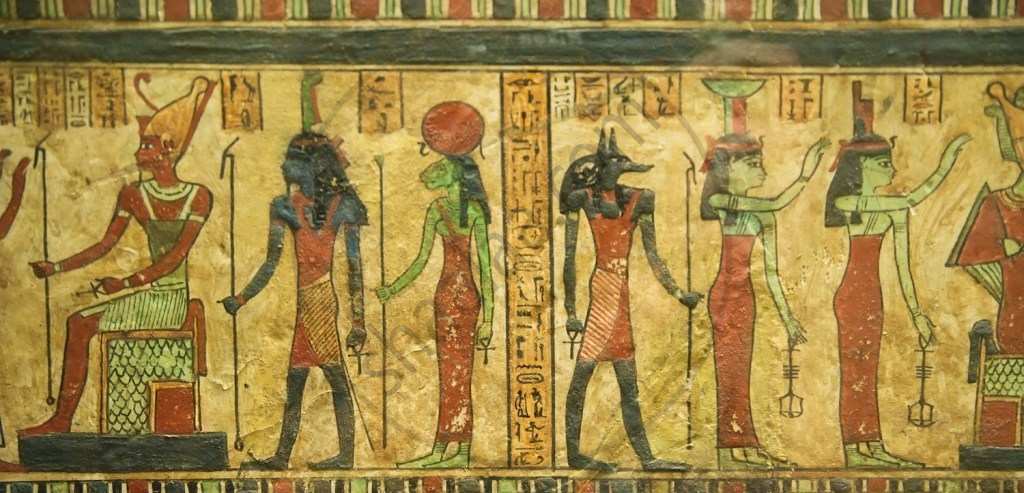
How do we know that they believed in life after death?
The figure on the right is of gods and goddesses.
With reference to this civilization answer in one or two words.
(a) One of the Seven Wonders of the ancient world: ……….
(b) Embalming a corpse: …………………..
(c) Sun god: …………..
(d) God of the dead: ..............
Who called Egypt ‘Gift of the Nile’.
Write the names of exported and imported products of Egyptians?
Briefly discuss the characteristic of the Chinese civilization with reference to religion
Discuss the main feature of Confucianism?
