Advertisements
Advertisements
Question
This is an artwork showing a religious reformer who was born in Lumbini in the 6th century BCE.
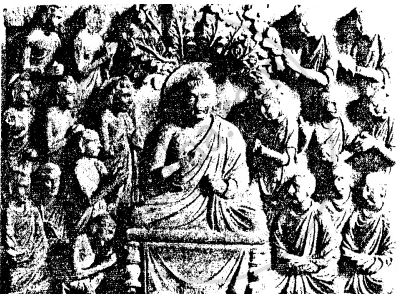
Name the religion he founded.
Advertisements
Solution
He found the Buddhism religion.
APPEARS IN
RELATED QUESTIONS
Fill in the blank:
Buddhism was founded by __________.
Fill in the blank:
His real name was ______.
State whether the following statement is True or False.
Mahavira was born at Pavapuri near Rajgir in Bihar.
State whether the following statement is True or False.
‘Mahayana’ form of Buddhism started worshiping Buddha as a god.
Textbook Keywords: Ashtangika marga
The ______ were denied the right to study religious texts.
Fill in the blanks.
The religious literature of the Buddhists is contained in the _________ and __________.
Explain the four noble truths of Buddhism.
State whether the following is true or false.
Buddhism was taught in Prakrit.
This is an artwork showing a religious reformer who was born in Lumbini in the 6th century BCE.
Why did his teachings appeal to the people?
