Advertisements
Advertisements
Question
This is a picture of a musical instrument used in Hindustani classical music. The name is derived from the Persian words ‘seh’ (meaning ‘three’) and tar’ (meaning ‘strings’).
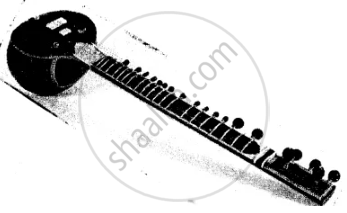
By whom and how was it invented?
Advertisements
Solution
It was invented by Amir Khusro in the 13th century. He created it by modifying the Persian instrument “Sehtar” (which had three strings) and combining it with elements of the Indian veena, resulting in a new instrument with multiple strings suitable for Indian classical music.
RELATED QUESTIONS
What evidence do we have to prove that Alauddin was a patron of art and learning?
State whether the following statement is True or False:
The Sufi saints believed in one God.
State whether the following is true or false:
The Rajput style of miniature painting continued in the Sultanate period.
Answer the following question in one or two words/sentences:
By whom were qawwalis popularized?
Answer the following question briefly:
Describe the main features of society during the Sultanate period with reference to the aristocracy.
Answer the following question briefly:
Describe the main features of society during the Sultanate period with reference to the peasants.
This is a picture of a musical instrument used in Hindustani classical music. The name is derived from the Persian words—‘seh’ (meaning ‘three’) and tar’ (meaning ‘strings’).
Name two other musical instruments that were developed during this period
What is the Price control policy?
What revenue reforms were introduced by Alauddin to meet heavy Army expenditure?
The Persian and Arabic styles blended harmoniously with the classical Hindu style to make a distinctive Indo-Islamic style. Discuss.
