Advertisements
Advertisements
प्रश्न
This is a picture of a musical instrument used in Hindustani classical music. The name is derived from the Persian words ‘seh’ (meaning ‘three’) and tar’ (meaning ‘strings’).
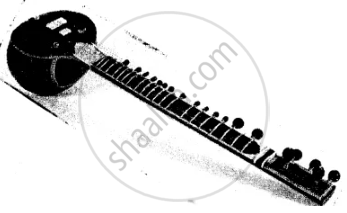
By whom and how was it invented?
Advertisements
उत्तर
It was invented by Amir Khusro in the 13th century. He created it by modifying the Persian instrument “Sehtar” (which had three strings) and combining it with elements of the Indian veena, resulting in a new instrument with multiple strings suitable for Indian classical music.
संबंधित प्रश्न
This is a picture of the most beautiful specimen of Khilji architecture, which was added as an entrance to the Qutb complex in Delhi.

With reference to the reign of this ruler, mention two important features of the Revenue reforms
Choose the correct answer:
Amir Khusrau is believed to have invented the______.
New types of food, such as bread and wine, became a part of Indian cuisine during the Sultanate period.
Answer the following question in one or two words/ sentences:
Why was the aristocracy the most powerful social group during the Sultanate period?
Answer the following question in one or two words/sentences:
What is the characteristic feature of Sultanate architecture?
Answer the following question in one or two words/sentences:
Which style of painting was patronized by the Lodi sultans?
This is a picture of a musical instrument used in Hindustani classical music. The name is derived from the Persian words—‘seh’ (meaning ‘three’) and tar’ (meaning ‘strings’).
Identify the musical instrument.
This is a picture of a musical instrument used in Hindustani classical music. The name is derived from the Persian words—‘seh’ (meaning ‘three’) and tar’ (meaning ‘strings’).
Name two other musical instruments that were developed during this period
The Persian and Arabic styles blended harmoniously with the classical Hindu style to make a distinctive Indo-Islamic style. Discuss.
Describe the important developments which took place in the following field during the Sultanate period:
Dress
