Advertisements
Advertisements
Question
The spermatogonia undergo division to produce sperms by the process of spermatogenesis. Choose the correct one with reference to above.
Options
Spermatogonia have 46 chromosomes and always undergo meiotic cell division
Primary spermatocytes divide by mitotic cell division
Secondary spermatocytes have 23 chromosomes and undergo second meiotic division
Spermatozoa are transformed into spermatids
Advertisements
Solution
Secondary spermatocytes have 23 chromosomes and undergo second meiotic division
APPEARS IN
RELATED QUESTIONS
The fusion of the male and the female gametes is called ______.
Draw a labelled diagram of sperm.
Name the functions - Acrosome of sperm.
Describe the process of budding in hydra.
The male sex hormone testosterone is secreted from ____________.
Expand the acronym.
hCG
The following is the illustration of the sequence of ovarian events (a-i) in a human female.
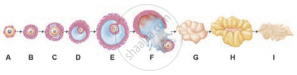
Identify the figure that illustrates ovulation and mention the stage of oogenesis it represents.
Which of the following occurs during maturation phase of spermatogenesis?
Identify the CORRECT sequence of events.
First meiotic division is observed in ____________.
______ undergoes 2nd meiotic division during spermatogenesis.
Select the pair of cells which does not divide further by mitosis.
The human male gamete is usually about ______ in length.
Which of the following stage of oogenesis forms a membrane called zona pellucida surrounding it?
During embryonic development, the establishment of polarity along anterior/posterior, dorsal/ventral or medial/lateral axis is called ______.
A reaction of granules content which harden the zona pellucida and ensures sure block to polyspermy is ______.
In spermatogenesis, reduction division of chromosome occurs during conversion of ______.
In oogenesis haploid egg is fertilised by sperm at which stage?
Head of epididymis is called as ______.
Aquatic animals in which fertilisation occurs in water are said to be
