Advertisements
Advertisements
Question
The least distance of distinct vision for a young adult with normal vision is about ______.
Options
25 m
2.5 cm
25 cm
2.5 m
Advertisements
Solution
The least distance of distinct vision for a young adult with normal vision is about 25 cm.
Explanation:
The least distance for distant vision for a young adult with normal vision is 25 cm.
RELATED QUESTIONS
Why is a normal eye not able to see clearly the objects placed closer than 25 cm?
What happens to the image distance in the eye when we increase the distance of an object from the eye?
The change in focal length of an eye lens is caused by the action of the ______.
Write the name.
The sensation on the retina persists for a while is
Write an Explanation.
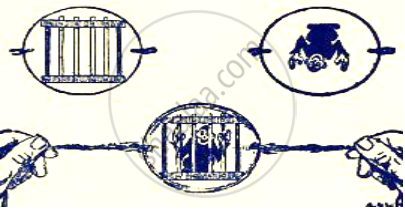
Persistence of vision
Identify and explain concepts given in this diagram.
The 'eye muscles' are controlled by which cranial nerves?
Near and far points of a young person normal eye respectively are:
The focal length of the eye lens increases when eye muscles ____________.
When light rays enter the eye, most of the refraction occurs at the
How are we able to see nearby and also the distant objects clearly?
In simple microscope ______ lens is used.
Name the following:
Two types of adaptations.
The figures (A) and (B) given below are showing some kind of adjustment. Study the figures and answer the questions that follow.
| A |  |
 |
B |
- Identify the kinds of adjustments done in the figures (A) and (B).
- Distinguish between the adjustments of figures (A) and (B) on the basis of:
- The size of pupil.
- The pigment which gets regenerated.
- Cells of the retina.
