Advertisements
Advertisements
प्रश्न
The least distance of distinct vision for a young adult with normal vision is about ______.
विकल्प
25 m
2.5 cm
25 cm
2.5 m
Advertisements
उत्तर
The least distance of distinct vision for a young adult with normal vision is about 25 cm.
Explanation:
The least distance for distant vision for a young adult with normal vision is 25 cm.
संबंधित प्रश्न
What happens to the image distance in the eye when we increase the distance of an object from the eye?
The change in focal length of an eye lens is caused by the action of the ______.
Write the name.
The persons which are unable to distinguish between different colours
Write an Explanation.
Persistence of vision
Identify and explain concepts given in this diagram.
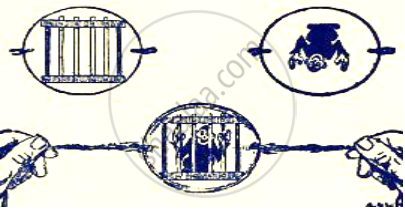
The eyes of the nocturnal birds like owls are having a large cornea and a large pupil. How does it help them?
Near and far points of a young person normal eye respectively are:
The focal length of the eye lens increases when eye muscles ____________.
A student sitting on the last bench can read the letters written on the blackboard but is not able to read/the letters written in his textbook. Which of the following statements is correct?
The danger signals installed at the top of tall buildings are red in colour. These can be easily seen from a distance because among all other colours, the red light
When light rays enter the eye, most of the refraction occurs at the
How are we able to see nearby and also the distant objects clearly?
Adjusting the focal length of the eye lens to view objects at different distances is done by ______.
The vitamin required for the synthesis of rhodopsin is ______.
Name the following:
Two types of adaptations.
Define the following term:
Adaptation
Differentiate between members of the following pair with reference to what is asked in the bracket.
Near and distant accomodation (shape of lens).
