Advertisements
Advertisements
प्रश्न
When light rays enter the eye, most of the refraction occurs at the
विकल्प
crystalline lens
outer surface of the cornea
iris
pupil
Advertisements
उत्तर
outer surface of the cornea
Explanation -
When the light rays enter the eye through a thin membrane, it enters through the transparent bulge on the front surface of the eyeball, called the cornea. Most of the refraction for the light rays entering the eye occurs at this outer surface of the cornea.
APPEARS IN
संबंधित प्रश्न
Why is a normal eye not able to see clearly the objects placed closer than 25 cm?
What happens to the image distance in the eye when we increase the distance of an object from the eye?
Write the name.
The sensation on the retina persists for a while is
Write the name.
The persons which are unable to distinguish between different colours
Write an Explanation.
Persistence of vision
Identify and explain concepts given in this diagram.
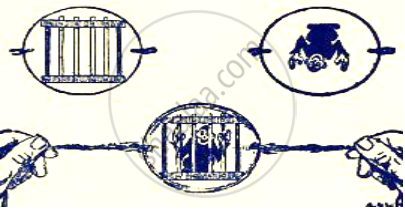
The eyes of the nocturnal birds like owls are having a large cornea and a large pupil. How does it help them?
The 'eye muscles' are controlled by which cranial nerves?
Having two eyes facilitates in
A: Increasing the field of view
B: Bringing three-dimensional view
C: Developing the concept of distance/size
Then the correct option is/are
Near and far points of a young person normal eye respectively are:
The focal length of the eye lens increases when eye muscles ____________.
The least distance of distinct vision for a normal eye is ____________.
A piece of red glass is heated till its glows in dark. The colour of flowing glass would be:-
In the blind spot of the human eye ______.
Name the following:
Two types of adaptations.
Differentiate between members of the following pair with reference to what is asked in the bracket.
Near and distant accomodation (shape of lens).
Differentiate between members of the following pair with reference to what is asked in the bracket.
Dark and light adaptation (pigments which will be regenerated).
