Advertisements
Advertisements
Question
The diagram given below is that of a developing human foetus in the womb. Study the same and then answer the questions that follow:
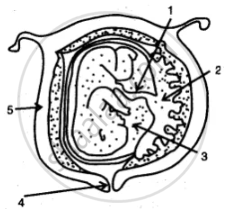
- Name the parts '1' to '5' indicated by guidelines.
- What term is given to the period of development of the foetus in the womb?
- How many days does the foetus take to be fully developed?
- Mention two functions of the parts labelled ‘2’ other than its endocrine function.
- Name the hormone (anyone) produced by the part labelled ‘2’.
- What is the function of the part marked ‘3’?
Advertisements
Solution
-
- Umbilical cord
- Placenta
- Amniotic fluid
- Cervix
- Uterus wall
- Gestation period.
- 280 days.
- It provides nutrition and the exchange of respiratory gases by diffusion.
- Prevents foetuses from jerks and shocks. It also prevents the foetus from sticking to the uterine wall.
Notes
Student should refer their answer according to their question
RELATED QUESTIONS
Name the following:
The membrane which protects the foetus and encloses a fluid
Mention three functions of the placenta.
Describe briefly the ways how a mammalian embryo is nourished
Write the functional activity of the following structure:
Placenta
All are functions of placenta, EXCEPT ______.
Assertion (A): The foetus respires but does not breathe.
Reason (R): The maternal blood supplies oxygen to the foetus through placenta.
Heart and blood vessels have been formed by the end of five weeks of pregnancy.
Given below is the name of certain stage/substance related to reproduction and found in human body. Answer the questions related to it.
Foetus.
- Where is it contained?
- How does it differ from embryo?
Distinguish between the following pair:
Placenta and umbilical cord
Which placental function involves the supply of essential nutrients such as glucose, amino acids, and vitamins to the foetus?
