Advertisements
Advertisements
Question
Differentiate
Fetus and Embryo.
Distinguish Between
Advertisements
Solution
| Fetus | Embryo |
| It is an unborn infant after two months of intra-uterine life till birth. | It is an unborn infant during the first two months of intra-uterine life. |
shaalaa.com
Is there an error in this question or solution?
RELATED QUESTIONS
Name the following:
The fluid surrounding the developing embryo
Mention three functions of the placenta.
Differentiate
Uterus and Urethra.
The diagram given below is that of a developing human foetus in the womb. Study the same and then answer the questions that follow:
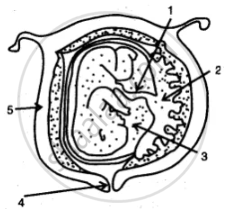
- Name the parts '1' to '5' indicated by guidelines.
- What term is given to the period of development of the foetus in the womb?
- How many days does the foetus take to be fully developed?
- Mention two functions of the parts labelled ‘2’ other than its endocrine function.
- Name the hormone (anyone) produced by the part labelled ‘2’.
- What is the function of the part marked ‘3’?
Explain the term Fetus
Write the functional activity of the following structure:
Uterus
Match the respiratory surfaces to the organisms in which they are found.
| Organ/ cells | Hormones | ||
| (i) | Corpus luteum | (a) | HCG |
| (ii) | Leydig's cells | (b) | Estrogen |
| (iii) | Placenta | (c) | Progesterone |
| (iv) | Graafian follicle | (d) | Testosterone |
Assertion (A): The foetus respires but does not breathe.
Reason (R): The maternal blood supplies oxygen to the foetus through placenta.
Does the foetus inside the mother's uterus breathe?
The cord containing blood vessels that connects the placenta with the foetus is called which structure?
