Advertisements
Advertisements
Question
State whether the following statements are true (T) or false (F). If false, correct them by changing any one single word in each.
Deafness is caused due to rupturing of the pinna.
Options
True
False
Advertisements
Solution
This statement is False.
Correct Statement:
Deafness is caused due to rupturing of eardrum.
APPEARS IN
RELATED QUESTIONS
Briefly explain the following terms: Power of accommodation
Mention if the following statement is true (T) or false (F) Give reason.
Malleus incus and stapes are collectively called the ear ossicles.
With reference to the human ear, answer the question that follow:
Name the part of the ear associated with
(1) static balance
(2) hearing
(3) dynamic balance.
With reference to the human ear, answer the question that follow:
Name the nerve, which transmits messages from the ear to the brain.
The figure below is the sectional view of a part of the skull showing a sense organ:
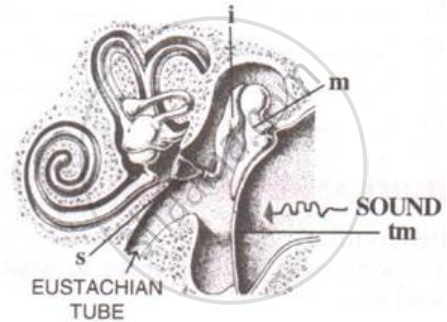
What do you call the part shown in the form of a spiral? What is its function?
Given below is a diagram of a part of the human ear. Study the same and answer the question that follow:
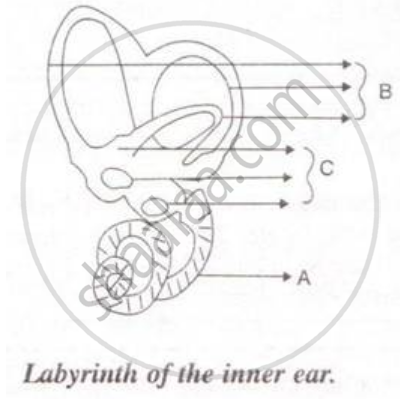
Name the parts labeled A, B and C in the diagram.
Mention, if the following statement is True or False
The part of ear associated with balance is the cochlea.
Mention, if the following statement is True or False
Deafness is caused due to the rupturing of the pinna.
State the Location:
Semicircular canals
- Draw a neat and well labelled diagram of the membranous labyrinth found in the inner ear.
- Based on the diagram drawn above in (i), give a suitable term for each of the following descriptions:
- The structure responsible for hearing.
- The sensory cells that help in hearing.
- The membrane-covered opening that connects the middle ear to inner ear.
- The nerves that carry impulses from the ear to the brain.
- The tube which equalises the air pressure on either side of the ear drum.
