Advertisements
Advertisements
Question
See the given pictures and write down the state of each object. (Solid, Liquid, Gas)
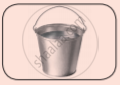 |
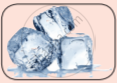 |
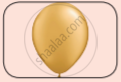 |
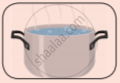 |
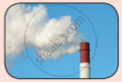 |
| _____ | ______ | ______ | ______ | ______ |
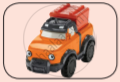 |
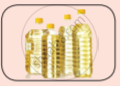 |
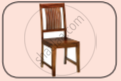 |
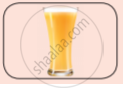 |
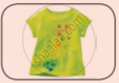 |
| ______ | _______ | ______ | ______ | ______ |
Advertisements
Solution
|
|
|
|
|
| Liquid | Solid | Gas | Gas | Gas |
|
|
|
|
|
| Solid | Liquid | Solid | Liquid | Solid |
APPEARS IN
RELATED QUESTIONS
Fill the following chart showing twelve solids, twelve liquids, four gases and eight materials.
Describe simple experiments to prove that gases have no definite volume or shape.
State the property of the following substance.
Manganese dioxide, a catalyst which alters the rate of a chemical reaction is black in colour.
______ soil is suitable for growing cotton.
Discuss briefly on three states of matter.
Solids are compressible.
Complete the Analogy.
Bucket: Plastic:: Table: ______.
Define the term ‘Diffusion’.
The tendency of particles to spread out in order to occupy the available space is ______.
A strong current of trivalent gaseous boron passed through a silicon crystal decreases the density of the crystal due to part replacement of silicon by boron and due to interstitial vacancies created by missing Si atoms. In one such experiment, one gram of silicon is taken and the boron atoms are found to be 1000 ppm by weight, when the density of the Si crystal decreases by 12%. The percentage of missing vacancies due to silicon, which are filled up by boron atoms will be ____ g. [Given · Atomic wt. Si= 30, B = 11]
