Advertisements
Advertisements
प्रश्न
See the given pictures and write down the state of each object. (Solid, Liquid, Gas)
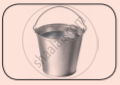 |
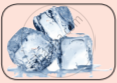 |
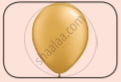 |
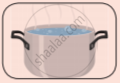 |
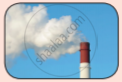 |
| _____ | ______ | ______ | ______ | ______ |
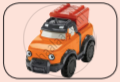 |
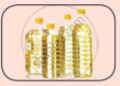 |
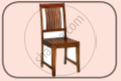 |
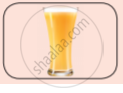 |
 |
| ______ | _______ | ______ | ______ | ______ |
Advertisements
उत्तर
|
|
|
|
|
| Liquid | Solid | Gas | Gas | Gas |
|
|
|
|
|
| Solid | Liquid | Solid | Liquid | Solid |
APPEARS IN
संबंधित प्रश्न
State two characteristic properties of a solid.
Classify the following into solids, liquids and gases.
Oxygen, milk, common salt, wax, stone, L.P.G, carbon- dioxide, sugar, mercury, coal, blood, butter, copper, coconut oil, kerosene.
Fill in the blanks:
The physical state of a substance, which has neither fixed volume nor fixed shape is a ______.
Write whether the following statements are true or false:
Only water can exist in three different states
Fill the following chart showing twelve solids, twelve liquids, four gases and eight materials.
State the main physical properties of matter.
Describe simple experiments to prove that solids have a definite volume
In solids, the space between the particles is less than in ______.
Distinguish the properties of solid, liquid, and gas. Draw a suitable diagram.
What is the physical state of water at 0°C.
