Advertisements
Advertisements
प्रश्न
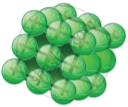
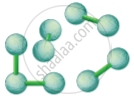
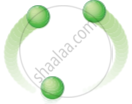
Distinguish the properties of solid, liquid, and gas. Draw a suitable diagram.
Advertisements
उत्तर
| S.No. | Solid | Liquid | Gas |
| 1. | Definite shape and volume | No definite shape, it attains the shape of the vessel | it has neither a definite shape nor a definite volume. |
| 2. | Incompressible | Compressible to a small extent | Highly compressible. |
| 3. | Little space between the particles | Greater space between the particles | Greater space between the particles. |
| 4. | Particles cannot move freely | Particles move freely | Particles are in a continuous, random motion. |
| 5. |
Particles in a Solid
Eg. Stone |
Particles in a Liquid
Eg. Water |
Particles in a Gas
Eg. Air |
APPEARS IN
संबंधित प्रश्न
Compare the properties of solids, liquids and gases in tabular form.
Classify the following into solids, liquids and gases.
Oxygen, milk, common salt, wax, stone, L.P.G, carbon- dioxide, sugar, mercury, coal, blood, butter, copper, coconut oil, kerosene.
Write whether the following statement is true or false:
If the container in which a gas is collected has an opening, the gas will flow out and spread itself indefinitely
For the following statement, say whether it describes a solid, a liquid or a gas.
Particles move about very quickly but do not leave the surface
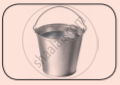
See the given pictures and write down the state of each object. (Solid, Liquid, Gas)
 |
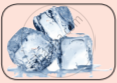 |
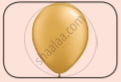 |
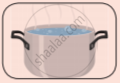 |
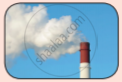 |
| _____ | ______ | ______ | ______ | ______ |
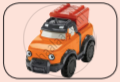 |
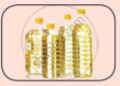 |
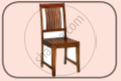 |
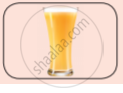 |
 |
| ______ | _______ | ______ | ______ | ______ |
Which of the following is a solid?
Complete the given analogy.
Solid: Definite shape:: ______: Shape of the vessel.
Gases have neither a definite shape nor a definite volume.
Which of the following are homogeneous in nature?
- ice
- wood
- soil
- Air
What is the physical state of water at 100ºC?
