Advertisements
Advertisements
प्रश्न
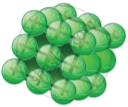
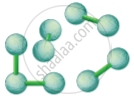
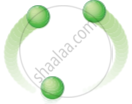
Distinguish the properties of solid, liquid, and gas. Draw a suitable diagram.
Advertisements
उत्तर
| S.No. | Solid | Liquid | Gas |
| 1. | Definite shape and volume | No definite shape, it attains the shape of the vessel | it has neither a definite shape nor a definite volume. |
| 2. | Incompressible | Compressible to a small extent | Highly compressible. |
| 3. | Little space between the particles | Greater space between the particles | Greater space between the particles. |
| 4. | Particles cannot move freely | Particles move freely | Particles are in a continuous, random motion. |
| 5. |
Particles in a Solid
Eg. Stone |
Particles in a Liquid
Eg. Water |
Particles in a Gas
Eg. Air |
APPEARS IN
संबंधित प्रश्न
Give reasons
A gas fills up the space available to it.
Fill in the blanks:
The physical state of a substance, which has neither fixed volume nor fixed shape is a ______.
For the following statement, say whether it describes a solid, a liquid or a gas.
Particles move about very quickly but do not leave the surface
Describe simple experiments to prove that solids have a definite volume
Complete the statement given below by selecting the correct word.
Solids and liquids have a definite ____ but gases do not.
Filtration method is effective in separating ______ mixture.
Match the following.
| Srl. no. | A | B | C |
| i | Separation of visible undesirable components | Water mixed with chalk powder | Magnetic Separation |
| ii | Separation of heavier and lighter components | Sand and water | Decantation |
| iii | Separation of insoluble impurities | Iron impurities | Filtration |
| iv | Separation of magnetic components from non-magnetic components | Rice and stone | Hand-picking |
| v | Separation of solids from liquids | Husk and paddy | Winnowing |
What is the physical state of water at 0°C.
Gases have neither a definite shape nor a definite volume.
Define the term ‘Diffusion’.
