Advertisements
Advertisements
Question
Read the poem line and answer the question given below.
And though his efforts never slack
And though he twist, and twirl, and tack,
Alas! Still faithful to his back
The pigtail hangs behind him.
- Pick out the rhyming words from the above lines and give the rhyme scheme for the same.
- Did he quit his trying? How can you say?
Advertisements
Solution
- Rhyming words : sack – tack – back
Rhyme scheme : a a a b - No he did not quit his trying. The lines ‘And though his efforts never slack. And though he twist and twirl and tack” shows that he did not stop his trying.
APPEARS IN
RELATED QUESTIONS
Choose the rhyming words from the box and write them in the correct blanks.
claws, jaws, ______ , ______
- file
- din
- caws
- nail
- while
- paws
- thin
Choose the rhyming words from the box and write them in the correct blanks.
grin, in, ______ , ______
- file
- din
- toss
- nail
- while
- paws
- thin
What does ‘improve his tail’ mean?
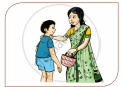
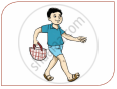
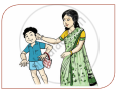
Tell the story of the poem in three or four sentences with the help of the pictures given below.

Read the lines and answer the questions given below.
It’s helping your fellowman to score When his chances hopeless seem;
Its forgetting self till the game is o’re And fighting for the team.
- What does 'it' stand for here?
- Write the rhyme scheme for the above lines.
Read the lines and answer the questions given below.
They may sound your praise and call you great,
They may single you out for fame,
But you must work with your running mate
Or you’ll never win the game;
- Whom does ‘they’ refer to?
- Which line talks about team spirit?
- Pick out the rhyming words from the given lines.
Pair work. Discuss with your partner and list out any five team games.
- ______
- ______
- ______
- ______
- ______
Discuss with your partner and pick out the rhyming words from the poem.
Did something dreadful happen? How would you describe the events in the poem– comedy or tragedy?
The summary of the poem is given.But there are some words missing. Fill in the blanks with the help of the box given below.
| faithfully | change | pigtail | round | sage | down | slack |
| out | hung | place | behind | vain | face |
Once upon a time there lived a______. He had a handsome______. He was worried and pondered over his pigtail's______. He wanted to______ it's place. He wanted it hanging at his______ He didn’t like it hanging there______ him. So he turned right and left and ______about, up and______, and in and______ but it still______ behind him. However he tried, his efforts were in______. But he didn’t______ in his efforts. Nevertheless his pigtail hung ______behind him.
