Advertisements
Advertisements
Question
On the basis of your understanding of the given passage, make notes in any appropriate format.
The Sherpas were nomadic people who first migrated from Tibet approximately 600 years ago, through the Nangpa La pass and settled in the Solukhumbu District, Nepal. These nomadic people then gradually moved westward along salt trade routes. During 14th century, Sherpa ancestors migrated from Kham. The group of people from the Kham region, east of Tibet, was called “Shyar Khamba”. The inhabitants of Shyar Khamba, were called Sherpa. Sherpa migrants travelled through Ü and Tsang, before crossing the Himalayas. According to Sherpa oral history, four groups migrated out of Solukhumbu at different times, giving rise to the four fundamental Sherpa clans: Minyagpa, Thimmi, Sertawa and Chawa. These four groups have since split into the more than 20 different clans that exist today
Sherpas had little contact with the world beyond the mountains and they spoke their own language. AngDawa, a 76-year-old former mountaineer recalled “My first expedition was to Makalu [the world’s fifth highest mountain] with Sir Edmund Hillary’’. We were not allowed to go to the top. We wore leather boots that got really heavy when wet, and we only got a little salary, but we danced the Sherpa dance, and we were able to buy firewood and make campfires, and we spent a lot of the time dancing and singing and drinking. Today Sherpas get good pay and good equipment, but they don’t have good entertainment. My one regret is that I never got to the top of Everest. I got to the South Summit, but I never got a chance to go for the top.
The transformation began when the Sherpa Tenzing Norgay and the New Zealander Edmund Hillary scaled Everest in 1953. Edmund Hillary took efforts to build schools and health clinics to raise the living standards of the Sherpas. Thus life in Khumbu improved due to the efforts taken by Edmund Hillary and hence he was known as ‘Sherpa King’.
Sherpas working on the Everest generally tend to perish one by one, casualties of crevasse falls, avalanches, and altitude sickness. Some have simply disappeared on the mountain, never to be seen again. Apart from the bad seasons in 1922, 1970 and 2014 they do not die en masse. Sherpas carry the heaviest loads and pay the highest prices on the world’s tallest mountain. In some ways, Sherpas have benefited from the commercialization of the Everest more than any group, earning income from thousands of climbers and trekkers drawn to the mountain. While interest in climbing Everest grew gradually over the decades after the first ascent, it wasn’t until the 1990s that the economic motives of commercial guiding on Everest began. This leads to eclipse the amateur impetus of traditional mountaineering. Climbers looked after each other for the love of adventure and “the brotherhood of the rope” now are tending to mountain businesses. Sherpas have taken up jobs as guides to look after clients for a salary. Commercial guiding agencies promised any reasonably fit person a shot at Everest.
Advertisements
Solution
Origin and Development of Sherpas
The roots:
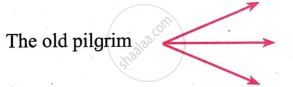
The Sherpas-nomadic tribe-migrated 600 years ago-settled in Solukhumbu District, of Nepal-14th Century migration westward from Kham-ShyarKhamba-inhabitants Sherpa- 1 Oral history-four groups at different times-Minyagpa, Thimmi, Sertawa, and Chawa-now 20′ groups.
Life in isolation:
Little contact beyond mountains-AngDawa-76-year-old former mountaineer-first expedition to Makalu with Hillary-not allowed to top-poor salary no equipment-danced, bought firewood-drank made merry-Today situation bright-Sherpas-good pay-good equipment-no, entertainment.-One regret-never got to the top of Everest.
Transformation:
1953 ascent-Hillary and Tenzing Norgay-Hillary built schools, healthcare centres-Sherpas life in Khumbu better-Hillary-‘Sherpa king’.
The difficult life of Sherpas:
Many casualties-avalanches and altitude sickness-Sherpas die-died en masse 1922-1970 and 2014 only-heavy loads-price death.
Commercialization of Everest-a boon:
Regular income-thousands of climbers-1990 onwards economic motive-traditional mountaineering-love of rope-brotherhood gone-jobs as guides-good salary-healthy Sherpas take a shot at Everest now-Guiding agencies help.
APPEARS IN
RELATED QUESTIONS
Give reasons for the following statement.
The author thought that his positive thinking strategy worked well after all.
The story is called ‘The Adventure’. Compare it with the adventure described in ‘We’re Not Afraid to Die...’
Discuss in pairs
Ruskin's insistence on looking intensely at words, and assuring oneself of meaning, syllable by syllable – nay, letter by letter.
Read the extract and state whether the following statement is true or false. Correct the false statement.
The author wanted to grow the desi variety of rice.
Find from the story one word for the following.
a low constant sound made by cats ______
What decision taken by Dick changed his fortune?
Read the poem and write 3 qualities of the following.
Read the poem and fill in the table.
| Time of the day | Location | Poet’s Activity | Hawker’s Activities | Gardener’s Activities | Watchman’s Activities |
| Morning | __________ | __________ | __________ | __________ | __________ |
| Afternoon | __________ | __________ | __________ | __________ | __________ |
| Night | __________ | __________ | __________ | __________ | __________ |
The mother was working, when the Swallow brought the yellow jewel.
The ______ bees make honey from nectar.
Select the correct options :
A Midsummer-Night’s Dream is a ___________________.
- poetic drama
- comedy of errors
- a comedy based on fantasy
- a character play
- a revenge tragedy
- belongs to realm of dreams
Read the passage and find the verbs used with the following nouns and phrases:
- volcano
- molten rock
- volcanic mountain
- dust
- 165 village and towns
- the wind and the sea
- seeds
- bird
Present any one of the speeches given above.
Expand the following ideas in a paragraph or two:-
Where there is a will, there is a way.
Complete the following sentence with reference to the passage:
Gautama, the Buddha, was born over two thousand five hundred years ago, as ______.
Form groups of five and discuss:
There are many things that seem small, minor, or insignificant to some people but the same may be the cause of great pain, suffering for others. Can you list such things? What can you do to provide help on those occasions?
Read the poem: ‘Home they brought her warrior dead’ by Alfred Lord Tennyson.
List the lines that begin with 'Here' or 'And here'.
Also, list the sentences or phrases that begin with ‘And there’.
These phrases and sentences tell us about things that appear one after the other as the carriage moves. Can we tell which ones are closer to the train and which ones are at a distance? How?
Gather more information about cold winters in Russia.
Now try to add a contradictory word to the following:
- What a ______ mess you’ve got us into!
- It’s a ______ imitation of a diamond necklace.
- My trip to Matheran was a ______ holiday.
- With such heavy makeup, she looks ______ ugly.
- A ______ crowd gathered to see the magic show.
Note: Contrasting words that go together are examples of the language device called Oxymoron.
Would you like to be a netizen?
The author was going to New York.
What happened when Somu left Zigzag with the Krishnans?
Let no ______ tone be______.
- soft
- vain
- fear
- joy
- love
- heard
- toiled
- mild
- good
- sand
- life
- harsh
He woke up very late in the morning.
What is the poem about?
The girl admitted to her brother that she was badly frightened.
How did Santhosh know that the river was clean?
How was he honoured by the Indian government?
Whom did Vicky want to do all his work?
