Advertisements
Advertisements
Question
Name the three classes of levers and state how are they distinguished. Give two examples of each class.
Advertisements
Solution
Three classes of levers are:
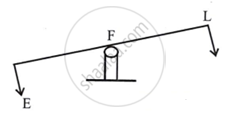
(a) Class I levers or first-order levers:

Examples are:
 |
 |
| See Saw | Scissors |
Between the effort and the load is the fulcrum.
[Ratio of M.A. and V.R.] for levers in this class can be any value between one and one, either more or less than one. They can multiply forces.
(b) Class II levers or second-order levers:
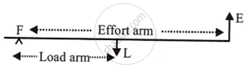
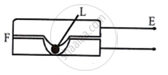
Examples are -
 |
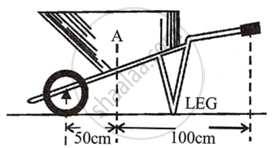 |
| Lemon squeezer | Wheel Barrow |
Between effort and fulcrum is load, with the effort arm always longer than the arm. These levers' M.A. and V.R. are always greater than 1.
(c) Class III levers, or third-order levers:
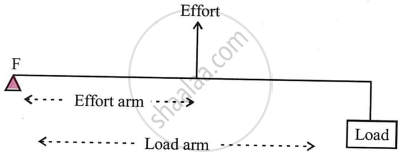
Examples are
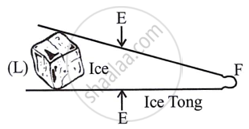 |
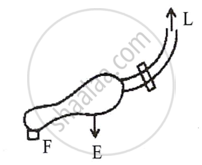 |
| Plucker or Fire Tong, (Sugar Tongs) |
Foot Treadle |
Always place effort between fulcrum and load. The effort arm is always shorter than the load arm. These levers' M.A. and V.R. are consistently less than 1.
RELATED QUESTIONS
State whether the following statement is True or False.
All levers are force multipliers.
Give one example of a class I lever in a case where the mechanical advantage is less than 1?
Name the class to which the following lever belong:
a nutcracker
Name the class to which the following lever belong:
a beam balance
Draw diagram to illustrate the position of fulcrum, load, and effort, of the following:
a beam balance
State three differences between the three classes of levers.
Answer the following.
Name the simplest of all types of machines.
Explain why scissors for cutting cloth may have blades longer than the handles, but shears for cutting metals have short blades and long handles.
Explain why the mechanical advantage of the class III type of lever is always less than 1.
Classify the following into levers:
A fishing rod
