Advertisements
Advertisements
Question
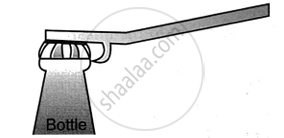
Give one example of a class I lever where the mechanical advantage is more than 1.
Advertisements
Solution
A shear is a class I lever with an M.A. more than 1.
RELATED QUESTIONS
Fill in the blank:
In class II levers, the load is in between fulcrum and .........
What do you mean by the mechanical advantage of a lever?
Which class of lever has the mechanical advantage always more than 1? Give an example.
Which class of lever has the mechanical advantage always less than 1? Give an example.
Give one example of a class I lever in a case where the mechanical advantage is equal to 1?
Name the class to which the following lever belong:
a lemon squeezer
Name the class to which the following lever belong:
a see-saw
Name the class to which the following lever belong:
a crowbar
Draw diagram to illustrate the position of fulcrum, load, and effort, of the following:
a see-saw.
State three differences between the three classes of levers.
Name the machine to which the following belong:
Sugar tongs
Tick the most appropriate answer.
Which of the following is a Class II lever?
Answer the following in short.
What is the basis of the classification of levers?
Both a pair of scissors and a pair of pliers belong to the same class of levers. Name the class of lever. Which one has the mechanical advantage less than 1?
Explain why the mechanical advantage of a class II of lever is always more than 1.
Draw a labelled diagram of a class II lever. Give one example of such a lever.
Classify the following into levers:
A catapult
Classify the following into levers:
Wheel barrow
Name the class of the lever shown in the picture below: