Advertisements
Advertisements
Question
Match the following.
| Column A | Column B | ||
| (1) | Fats | (a) | Jowar |
| (2) | Proteins | (b) | Oil |
| (3) | Vitamins | (c) | Bran of cereals |
| (4) | Minerals | (d) | Pulses |
| (5) | Starchy foods | (e) | Iron |
Advertisements
Solution
| Column A | Column B | ||
| (1) | Fats | (b) | Oil |
| (2) | Proteins | (d) | Pulses |
| (3) | Vitamins | (c) | Bran of cereals |
| (4) | Minerals | (e) | Iron |
| (5) | Starchy foods | (a) | Jowar |
APPEARS IN
RELATED QUESTIONS
Distinguish between the following:
Herbivore and Carnivore
Name the sources of the following:
Sucrose
All the substances in our food which are useful for various bodily processes are called ______.
Classify according to food-type.
Cow
Which organisms are greater in number - autotrophs or heterotrophs? Why?
Is ‘nutrition’ a necessity for an organism? Discuss.
In the absence of which of the following will photosynthesis not occur in leaves?
Paheli avoids eating vegetables but likes to eat biscuits, noodles and white bread. She frequently complains of stomachache and constipation. What are the food items that she should include in her diet to get rid of the problem? Give reason for your answer.
Mention two components of food that do not provide nutrients.
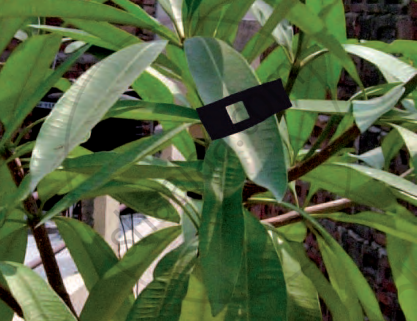
Take a potted plant with broad leaves. Take two strips of black paper and cut out a small square in the centres. Cover a part of two leaves with these papers and secure them with paper clips Figure. Keep the plant in sunlight for 2–5 days. Observe the difference in the colour of the covered and the uncovered portions on the leaf. Perform iodine test on this leaf. Did the two parts show different results? Now take second leaf. Remove the strip and expose the covered part to the sunlight for 2–3 days and do the iodine test again. Describe your observations.