Advertisements
Advertisements
Question
What is obesity?
Advertisements
Solution 1
When a person eats too much fat-containing foods, then the fat gets deposited in his body and he may end up suffering from a condition called obesity.
Solution 2
Abnormal or excessive fat buildup that poses a health concern is referred to as obesity. Overweight is defined as a Body Mass Index (BMI) of 25 or higher, and obesity as a BMI of 30 or higher. A increased risk of major illnesses like type 2 diabetes, heart disease, and cancer is linked to obesity. Additionally, obesity can result in psychological issues like depression and low self-esteem as well as impair a person's quality of life.
APPEARS IN
RELATED QUESTIONS
Name the sources of the following:
Sucrose
Name the sources of the following:
Cellulose
Carbohydrates and _______ provide _______ to our body.
Spot the following in the table of vitamins and minerals.
Essential mineral for healthy bones and teeth.
Spot the following in the table of vitamins and minerals.
Sensory organ affected due to the deficiency of Vitamin A.
Classify according to food-type.
Vulture
Classify according to food-type.
Fungus
Classify according to food-type.
Lion
Classify according to food type.
Sparrow
Very Short Answer Type Questions:
Name two energy-providing nutrients.
Very Short Answer Type Questions:
Name two plant food items which provide proteins.
Very Short Answer Type Questions:
Name two food items which provide fats.
Short Answer Type Questions:
What are the functions of carbohydrates?
Complete the analogy:
Ptyalin : Amylase :: Pepsin : ................. .
Differentiate
Kwashiorkar from Marasmus
Higher Order Thinking Skill.
Look at the picture and answer the question that follows
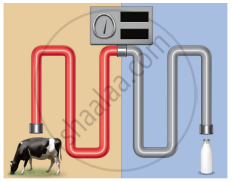
- Name the process involved in the given picture.
- Which diary food is preserved by this process?
- What is the temperature required for the above process?
Nitrogen is an essential nutrient for plant growth. But farmers who cultivate pulse crops like green gram, bengal gram, black gram, etc. do not apply nitrogenous fertilizers during cultivation. Why?
Can you give me a name?
Solve the following riddles by writing the name of the organism and its mode of nutrition. One riddle is solved to help you.
I am tall but I cannot move. I am green and can prepare my own food. ______, ______
Read the food items given below:
- Wheat
- Ghee
- Iodised salt
- Spinach (palak)
Which of the above food items are “energy giving foods”?
Paheli avoids eating vegetables but likes to eat biscuits, noodles and white bread. She frequently complains of stomachache and constipation. What are the food items that she should include in her diet to get rid of the problem? Give reason for your answer.
The lipids can provide a maximum of ______ of energy.
What do we actually mean when we say that the "enzymes are specific in their action"?
Differentiate between Macro and Micro Nutrients.
Take a potted plant with broad leaves. Take two strips of black paper and cut out a small square in the centres. Cover a part of two leaves with these papers and secure them with paper clips Figure. Keep the plant in sunlight for 2–5 days. Observe the difference in the colour of the covered and the uncovered portions on the leaf. Perform iodine test on this leaf. Did the two parts show different results? Now take second leaf. Remove the strip and expose the covered part to the sunlight for 2–3 days and do the iodine test again. Describe your observations.

Which of the following set includes all fat soluble vitamins?
