Advertisements
Advertisements
Question
Justify your answer.
| Figure 1 | Figure 2 | Figure 3 |
 |
 |
 |
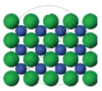
The arrangement of particles in three different phases of matter is shown above.
- Which state is represented by Fig. 1?
- In which state will the inter-particle attraction be maximum?
- Which one of them cannot be contained in an open vessel?
- Which one can take the shape of its container?
Short/Brief Note
Advertisements
Solution
- The liquid state is represented by Fig 1.
- In Fig. 3 the inter-particle attraction will be maximum because it is in a solid state.
- Fig. 2 cannot be contained in an open vessel, as it is in a gaseous state.
- Fig. 1 can take the shape of its container, as it is in a liquid state.
shaalaa.com
Is there an error in this question or solution?
Chapter 3: Matter around Us - Evaluation [Page 52]
APPEARS IN
RELATED QUESTIONS
Match the following
| Column A | Column B | ||
| (a) | Molecules | (i) | Water boils |
| (b) | 100° C | (ii) | Evaporation |
| (c) | 0° C | (iii) | Changes from solid to gas |
| (d) | At all temperatures | (iv) | Matter |
| (e) | Camphor | (v) | Water freezes |
Liquids have definite shape and definite volume.
Define matter. Give four examples of matter.
The three important metalloids are.............................. and ..........................
What is meant by (i) elements (ii) compounds, and (iii) mixtures ?Write down the names of two elements, two compounds and two mixtures.
The elements which normally exist in the liquid state are :
Define solute.
Name the process which is used in milk dairies to separate cream from milk.
All the matter made of ______.
______ is so hard that it can scratch glass.
