Advertisements
Advertisements
Question
Give the IUPAC name of the following ether:
CH3OCH2CH2Cl
Advertisements
Solution
2-Chloro-1-methoxyethane
APPEARS IN
RELATED QUESTIONS
Write the IUPAC name of the following compound:

Write the IUPAC name of the following compound:
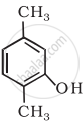
Write the IUPAC name of the following compound:

How is phenol converted into the following?
picric acid
Write the IUPAC name of the following compound:
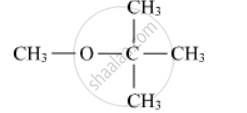
Write the IUPAC name of the following :

Write structural formulae for 3-Methoxyhexane
Write a structural formula for methyl vinyl ether.
Ethyl alcohol is industrially prepared from ethylene by:
1-Propanol and 2-propanol can be best distinguished by:
\[\ce{HC ≡ CH ->[HgSO4][H2SO4] ->[CH3MgBr][H2O] ->[PBr3]}\]
IUPAC name of the compound \[\begin{array}{cc}
\ce{CH3 - CH - OCH3}\\
\phantom{}|\phantom{....}\\
\phantom{}\ce{CH3}\phantom{..}
\end{array}\] is ______.
Write the IUPAC name of the compound given below.
\[\begin{array}{cc}
\phantom{}\ce{CH3 - CH2 - C = C - OH}\\
\phantom{........}|\phantom{....}|\phantom{}\\
\phantom{..............}\ce{CH3 CH2OH}
\end{array}\]
What happens when benzene diazonium chloride is heated with water?
Assertion: IUPAC name of the compound
\[\begin{array}{cc}
\ce{CH3 - CH - O - CH2 - CH2 - CH3}\\
|\phantom{....................}\\
\ce{CH3}\phantom{.................}
\end{array}\] is 2-Ethoxy-2-methylethane.
Reason: In IUPAC nomenclature, ether is regarded as hydrocarbon derivative in which a hydrogen atom is replaced by —OR or —OAr group [where R = alkyl group and Ar = aryl group]
Assertion: Like bromination of benzene, bromination of phenol is also carried out in the presence of Lewis acid.
Reason: Lewis acid polarises the bromine molecule.
Explain why Lewis acid is not required in bromination of phenol?
Draw structure of the following compound.
Prop-2-en-1-ol
