Advertisements
Advertisements
Question
Give the character sketch of the lady in The Bear Story’.
Advertisements
Solution
The lady is very kind. Once she finds a bear cub in the forest. She tames the baby bear. She brings him up like her own son. She feeds him on the milk bottle.
She gives him an apple to eat every day. She gives him a vegetarian diet. Sometimes she punishes the bear for his bad behaviour. She pets him before chaining.
The lady is very bold. She crosses the forest alone fearlessly. She hits the wild bear hard when he chases her in the forest. She does not tolerate disobedience even on the part of her pet bear. She is fond of taming animals.
RELATED QUESTIONS
Thinking about the poem
Is there any difference between the two roads as the poet describes them
(i) in stanzas two and three?
(ii) in the last two lines of the poem?
Have you seen anybody winnow grain at home or in a paddy field? What is the word in your language for winnowing? What do people use for winnowing? (Give the words in your language, if you know them.)
Pick out word from the text that mean the same as the following word or expression. (Look in the paragraph indicated.)
the power to endure, without falling ill : _________
Based on your reading of the story, answer the following question by choosing the correct option:
“The very naming of Harold had caused a sacrifice on his part.” The writer’s tone here is
In groups of six, work on one of the mysteries given below by surfing the net and through other sources. Create a power point presentation/a photo essay.
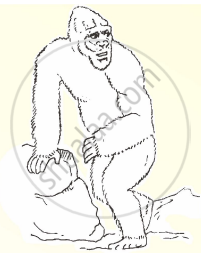
- Yeti, the abominable snowman
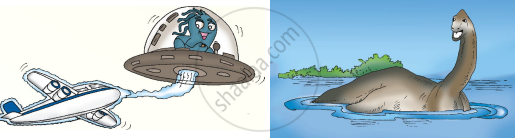
- Loch Ness Monster
- UFOs (Unidentified Flying Objects)
- Lost city of Atlantis
- Crop circles
- Nazca lines
Read the following passage on New Zealand.
New Zealand is a Mecca for nature lovers. Throughout most of New Zealand's geological history, it was a bird's paradise. The islands were once part of the southern super - continent Gondwana from which they broke off around 80 million years ago before mammals had evolved and spread.
(courtesy: Terra Green Sept 2008 issue 06)
The underlined words express a relationship usually of space or time between the words with which they stand. Such 'Positional' words which are used before nouns (pre-position) are called prepositions.

What does he plant who plants a tree?
He plants cool shade and tender rain,
And seed and bud of days to be,
And years that fade and flush again;
He plants the glory of the plain;
He plants the forest's heritage;
The harvest of a coming age;
The joy that unborn eyes shall see___
These things he plants who plants a tree.
Read the lines given above and answer the question that follow:
Explain with reference to context.
“So that is what you are doing out here? A marshal!” “My dear Miss Fairchild,” said ’ Easton, calmly, “I had to do something. Money has & way of taking wings unto itself, and
you know it takes money to keep step with our crowd in Washington. I saw this opening in the West, and—well, a marshalship isn’t quite as high a position as that of ambassador, but—” “The ambassador,” said the girl, warmly, “doesn’t call any more. He needn’t ever have done so. You ought to know that. And so now you are one of these dashing Western heroes, and you ride and shoot and go into all kinds of dangers. That’s different from the Washington life. You have been missed from the old crowd.” The girl’s eyes, fascinated, went back, widening a little, to rest upon the glittering handcuffs. “Don’t you worry about them, miss,” said the other man. “All marshals handcuff themselves to their prisoners to keep them from getting away. Mr. Easton knows his business.” “Will we see you again soon in Washington?” asked the girl. “Not soon, I think,” said Easton. “My butterfly days are over, I fear.”
Read the extract given below and answer the question that follow.
Give three similarities between Mr Easton and a butterfly.
Answer the following questions with reference to Ray Douglas Bradbury's short story, 'All Summer in a Day'.
(i) Name the planet on which this story is set. Describe everyday life on this planet.
(ii) Why was there so much excitement in the schoolroom that morning? What sets Margot apart from the other children?
(iii) Describe how the planet was transformed when the sun came out and shone briefly over it.
Why was Margot not able to witness this phenomenon?
What emotion of you supposes the children experienced when Margot emerged at the end of the story?
Name some other creatures that live in anthills.
Why did the narrator’s Grandfather visit Lucknow?
What made Ray think the visitor was not really a shopper?
What happens to our body when we sleep?
What made the ghost believe Vijay Singh was dead?
Which line in the poem suggests that you need a keen eye and a sharp ear to enjoy a meadow? Read aloud the stanza that contains this line.
Discuss the question in pairs before you write the answer.
Who did he finally choose as his master and why?
Answer the following question.
When Jumman’s aunt realised that she was not welcome in his house, what arrangement did she suggest?
Write appropriate question words in the blank spaces in the following dialogue.
Neha: ______ did you get this book?
Sheela: Yesterday morning.
Neha: ______ is your sister crying?
Sheela : Because she has lost her doll.
Neha: ______ room is this, yours or hers?
Sheela: It’s ours
Neha: ______ do you go to school?
Sheela: We walk to the school. It is nearby.
In the poem, We are the Music Makers, what are the 'sea-breakers'?
Read the passage given below and answer the questions (i), (ii) and (iii) that follow:
|
(1) |
The Police Superintendent is walking across the market square followed by a constable. Suddenly he hears a loua shout, "So you bite, you damned brute? Lads, don't let the dog go! Biting is prohibited nowadays!" There is the sound of 'yelping and the Superintendent sees a dog running out of a timber-yard. A man runs after it and tries to seize the dog by its hind legs'. Sleepy countenances protrude from the shops and soon a crowd gathers. |
5 |
|
(2) |
"It looks like a row, your honour", says the constable. The Superintendent turns to his left and strides towards the crowd. He sees the aforementioned man standing close by the gate of the timber-yard, holding his right hand in the air and displaying a bleeding finger to the crowd. He was the town's goldsmith. The culprit who has caused the sensation, a white puppy with a sharp muzzle and a yellow patch on its back, is sitting on the ground. "What's it all about?", the Superintendent inquires, pushing his way through the crowd, "Who was it that shouted?" |
10 |
|
(3) |
The goldsmith answers, "I was walking along here not interfering with anyone when this low brute, for no rhyme or reason, bit my finger. I am a working man. Mine is fine work. I must have damages, for I shan't be able to use this finger for a week." |
15 |
|
(4) |
"I won't let this pass! Find out whose dog it is and draw up a report!", the Superintendent commands the constable. |
20 |
|
(5) |
"I fancy it's General Zhigalov's dog", says someone in the crowd. Suddenly indignant, the Superintendent turns to the goldsmith and asks, "There's one thing I can't make out. How it could have bitten you? Surely it couldn't reach your finger. It's a little dog, and you are a great hulking fellow! You must have scratched your finger with a nail, and then the idea struck you to get damages for it. I know your sort!" |
25 |
|
(6) |
"No, that's not the General's dog", says the constable, with profound conviction, "the General has valuable dogs, and goodness knows what this is! No coat, no shape, a low creature." The Superintendent says, "You have been injured, goldsmith and we can't let the matter drop. You must be compensated for the damage." |
30 |
|
(7) |
"It is the General's, that's certain!", says a voice in the crowd. "Oh! Constable, take the dog to the General's and inquire there. Say I found it and sent it. And tell them not to let it out into the street. A dog is a delicate animal. And you, you goldsmith, put your hand down. It's your own fault." On seeing the General's cook approaching, the Superintendent asks him, "Is it one of yours?" "We have never had one like this", says the cook. "There's no need to waste time asking", decides the Superintendent, "it's a stray dog. Chase it away!" |
35 |
|
(8) |
"It's not our dog", the cook goes on, "it belongs to the General's brother who arrived the other day." "Is his Excellency's brother here? Delighted to hear if', says the Superintendent, and his whole face beams with an ecstatic smile, "it's not a bad pup. A lively creature, indeed. Come, why are you shivering, you nice little pup?" |
40 |
|
(9) |
The cook calls the dog and walks away from the timber-yard. |
45 |
|
(10) |
The crowd laughs at the goldsmith. |
|
|
|
Adapted from : A Chameleon by Anton Chekov |
|
-
- Given below are three words and phrases. Find the words which have a similar meaning in the passage: [3]
- faces
- walks purposefully
- precious
- For each of the words given below, choose the sentence that uses the same word unchanged in form, but with a different meaning from that which it carries in the passage: [3]
- row (line 7)
- We sat in a row at the back of the room.
- The vegetables were planted in neat rows.
- A row has broken out amongst the vendors.
- The fisherman rowed us back to the shore.
- left (line 8)
- I instructed the driver to take a left turn at the intersection.
- The bank is situated to the left of the library.
- They left the house at six o'clock in the morning to reach the airport on time.
- He's giving away money left, right and centre.
- fancy (line 21)
- He fancies himself as a serious actor.
- I was foot-loose and fancy-free in those days.
- He had some fanciful notion about crossing the Atlantic in a barrel.
- He sells poor goods, but charges fancy prices.
- row (line 7)
- Given below are three words and phrases. Find the words which have a similar meaning in the passage: [3]
- Answer the following questions in your own words as briefly as possible:
- How does power play an important role in the Superintendent's decisions? [2]
- Why does the goldsmith ask for damages? [2]
- Who does the dog belong to? How do we know it? [2]
- Trace the Superintendent's reactions from the time the initial voice in the crowd is heard till the cook takes the dog away (paragraphs 5 to 9). You are required to write the summary in the form of a connected passage in about 100 words. Failure to keep within the word limit will be penalised. [8]
