Advertisements
Advertisements
Question
Gather additional information along with photographs about the work of the following personality in the Civil Disobedience Movement and exhibit it in the class.
Khan Abdul Gafar Khan:
Advertisements
Solution
KHAN ABDUL GAFFAR KHAN:
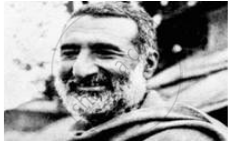
Khan Abdul Ghaffar Khan was a Pashtun independence activist who worked for the freedom of the country. He was a political leader with a nonviolent method. He was a close associate of Mahatma Gandhi and worked extensively with him in the struggle for freedom. His main aim was to form a united and secular India. He founded the Khudai khidmatgar or Servant of God. This organization formed over 1 lakh members and became an important opposition force for the British army. Through strikes, protests, and peaceful marches, they were able to achieve some success and became dominant in the field of politics. He had also participated in the Salt Satyagraha with Gandhiji, but in the year 1930 he was arrested during the protest arising out of the same.
He was a close partner of the Indian National Congress as well as other visible leaders. He was a respected member, but he sometimes disagreed with Gandhiji and his policy. For instance, in 1931, when Congress offered him the presidency of the party, he refused by saying that he was just a simple soldier who wanted to serve. He was a major member of the party for many years but resigned in 1939 because of his differences with the party's war policy. He joined Congress again when the World Policy was revised. He had also worked extensively for the rights of women in society for the same. He strongly opposed the partition of the country but was accused of being anti-Muslim by some politicians and was physically assaulted in 1946.
RELATED QUESTIONS
Khan Abdul Gafar Khan established the organisation named ______.
Explain the following statement with reason.
The Government declared Martial Law at Solapur.
Explain the following statement with a reason.
The deliberations in the First Round Table Conference proved to be meaningless.
Explain the following statement with reason.
Gandhiji began fast unto death in the Yerwada jail.
Answer the following question in 25 to 30 words.
Why did Gandhiji decide to break the Salt Act to begin the satyagraha all over the country?
Answer the following question in 25 to 30 words.
Why did the Indian National Congress withdraw the Civil Disobedience Movement?
Plot on an outline map of India ,the places mentioned in the chapter where the Civil Disobedience Movement took place.
What did the programme of Civil Disobedience consist of?
Why was the Dandi March important in the history of the National Movement?
People protested against the ______ because it had seven British members and no Indian representation.
