Advertisements
Advertisements
प्रश्न
Gather additional information along with photographs about the work of the following personality in the Civil Disobedience Movement and exhibit it in the class.
Khan Abdul Gafar Khan:
Advertisements
उत्तर
KHAN ABDUL GAFFAR KHAN:
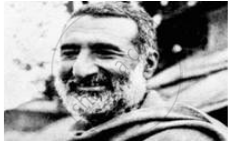
Khan Abdul Ghaffar Khan was a Pashtun independence activist who worked for the freedom of the country. He was a political leader with a nonviolent method. He was a close associate of Mahatma Gandhi and worked extensively with him in the struggle for freedom. His main aim was to form a united and secular India. He founded the Khudai khidmatgar or Servant of God. This organization formed over 1 lakh members and became an important opposition force for the British army. Through strikes, protests, and peaceful marches, they were able to achieve some success and became dominant in the field of politics. He had also participated in the Salt Satyagraha with Gandhiji, but in the year 1930 he was arrested during the protest arising out of the same.
He was a close partner of the Indian National Congress as well as other visible leaders. He was a respected member, but he sometimes disagreed with Gandhiji and his policy. For instance, in 1931, when Congress offered him the presidency of the party, he refused by saying that he was just a simple soldier who wanted to serve. He was a major member of the party for many years but resigned in 1939 because of his differences with the party's war policy. He joined Congress again when the World Policy was revised. He had also worked extensively for the rights of women in society for the same. He strongly opposed the partition of the country but was accused of being anti-Muslim by some politicians and was physically assaulted in 1946.
संबंधित प्रश्न
Explain the following statement with reason.
Chandrasingh Thakur was court martialled and severely punished.
Answer the following question in 25 to 30 words.
Why did Gandhiji decide to break the Salt Act to begin the satyagraha all over the country?
Answer the following question in 25 to 30 words.
Why did the Indian National Congress withdraw the Civil Disobedience Movement?
What did the programme of Civil Disobedience consist of?
Who is popularly known as the Frontier Gandhi?
Why was the Simon Commission set-up? Why was the Commission so called?
Why was the ‘Civil Disobedience Movement’ of March 1930, withdrawn?
Or
What assurance did Gandhiji withdraw the Civil Disobedience Movement.
Why was the Simon Commission appointed by the British Government? Why did the Congress boycott the Commission.
The Civil Disobedience Movement was significant in the history of the National Movement. With-reference to this movement, write short notes on the circumstances leading to Civil Disobedience Movement.
People protested against the ______ because it had seven British members and no Indian representation.
