Advertisements
Advertisements
Question
Gather additional information along with photographs about the work of the following personality in the Civil Disobedience Movement and exhibit it in the class.
Babu Genu:
Advertisements
Solution
BABU GENU:

Babu Genu said was an Indian freedom fighter and a revolutionary. He was a worker in one of the cotton mills in Mumbai but later became an active participant in the project and organized many activities for the same. On December 12, 1930, a cloth merchant from Manchester was moving the foreign-made cloth from his shop to the Mumbai port. He had police protection as well. The freedom fighters begged not to move that truck but the police forced them aside and managed to get the truck moving. On Kalbadevi Road, Babu Genu stood in front of the truck and shouted praises for Gandhiji. The police officer ordered the driver to drive the truck over him. He was an Indian and said that both of them are Indians so how can he murder his brother? The police sat on the driver's seat and drove the truck over him and crushed him to death. This caused strikes and protests all over Mumbai.
Although he was not a formally educated person, he understood the link between politics and economics. Economics is the driving force of British rule and wanted to fight against it.
RELATED QUESTIONS
State any two causes that led to the Civil Disobedience Movement in 1930.
______ led the Dharasana Satyagraha.
Explain the following statement with reason.
The Government declared Martial Law at Solapur.
Explain the following statement with reason.
Gandhiji began fast unto death in the Yerwada jail.
Answer the following question in 25 to 30 words.
Why did Gandhiji decide to break the Salt Act to begin the satyagraha all over the country?
Mention any two events which led to the Civil Disobedience Movement of 1930.
Briefly state the outcome of the Civil Disobedience Movement.
State any three recommendations of the Simon Commission.
Or
Mention any two recommendations of the Simon Commission.
The British Government announced the formation of the Simon Commission in 1927. In this context briefly explain the purpose of its formation and its main recommendations.
Identify the picture as shown and answer the following: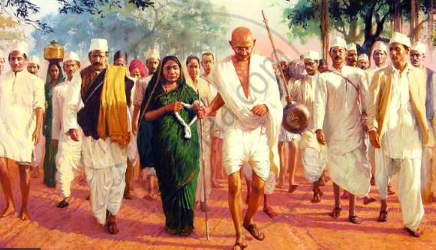
(i) With which movement it is associated?
(ii) When and where the movement took place?
