Advertisements
Advertisements
Question
The British Government announced the formation of the Simon Commission in 1927. In this context briefly explain the purpose of its formation and its main recommendations.
Advertisements
Solution
The British Government sent a Commission under the chairmanship of Sir John Simon in November 1927 to prepare a report on the working of the reforms of 1919. The Congress decided to boycott it because no Indian was appointed to this Commission. The people protested against this Commission and raised a cry ‘Simon Go Back’. It took a serious turn at Lahore, where Lala Lajpat Rai received serious injuries in the Lathi charge. He was so seriously wounded that he died. Shortly after the whole country rose in great anger.
However, the Simon Commission completed its task and submitted its report. The following were the main features of the report:
- Complete autonomy in the Province, including the department of law and order, but the Governor was given over-riding powers in certain matters.
- British troops and British officers to stay on in Indian regiments for many years.
- Federal Government at the centre, embracing not only British Indian but the Princely States as well.
- Provincial Legislative Councils to be enlarged.
- The Governor General to select and appoint members of his cabinet.
- High Courts to be under the administrative control of the Government of India.
RELATED QUESTIONS
______ organised the Round Table Conference in London.
______ led the Dharasana Satyagraha.
Explain the following statement with reason.
Chandrasingh Thakur was court martialled and severely punished.
Explain the following statement with reason.
The Government declared Martial Law at Solapur.
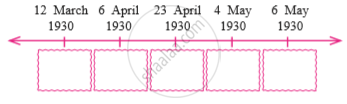
Complete the following timeline of Civil Disobedience Movement.
What was the reaction of the Muslim League to the Nehru Report?
Mention any two events which led to the Civil Disobedience Movement of 1930.
Why was the ‘Civil Disobedience Movement’ of March 1930, withdrawn?
Or
What assurance did Gandhiji withdraw the Civil Disobedience Movement.
Discuss why Congress demand for complete independence in 1929 led to the launch of the Civil Disobedence Movement.
People protested against the ______ because it had seven British members and no Indian representation.
