Advertisements
Advertisements
Questions
What was the reaction of the Indians to the Simon Commission?
Why was the Simon commission boycotted by the Indians?
Why was the Simon Commission boycotted everywhere in India?
Advertisements
Solution 1
All the political parties, including the Congress and Muslim League, decided to boycott the Commission because it was an all-white Commission with no Indians associated with it. The Simon Commission was received with black flags, mass demonstrations, hartals and slogans of ‘Simon Go Back’ all over the country.
Solution 2
Sir John's Commission consisted of seven British members of Parliament and no Indian members. This outraged the Indians, who perceived it as an affront to their respect. As a result, it was met with black flags and widespread protests. Wherever the commission went, people chanted 'Simon Go Back'.
APPEARS IN
RELATED QUESTIONS
Why was the Congress session held at Lahore significant to the National Movement?
Explain the following statement with reason.
The Government declared Martial Law at Solapur.
Explain the following statement with a reason.
The deliberations in the First Round Table Conference proved to be meaningless.
Answer the following question in 25 to 30 words.
Why did the Indian National Congress withdraw the Civil Disobedience Movement?
What did the programme of Civil Disobedience consist of?
Mention any two events which led to the Civil Disobedience Movement of 1930.
Trace the programme and progress of Civil Disobedience Movement under the leadership of Mahatma Gandhiji with reference to the Dandi March, 1930.
State four recommendations of the Nehru Report.
With the help of the Motilal Nehru Report 1928, briefly describe the events that led to the launching of the Civil Disobedience Movement.
Identify the picture as shown and answer the following: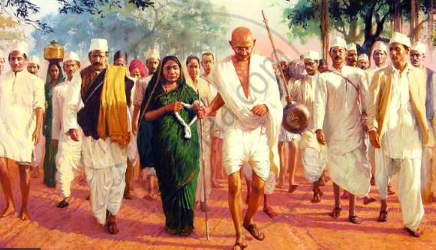
(i) With which movement it is associated?
(ii) When and where the movement took place?
