Advertisements
Advertisements
Question
Explain why strings of different thicknesses are provided on a stringed instrument.
[Hint: Natural frequency of vibration of a stretched string is inversely proportional to the radius (or thickness) of string so notes of different frequencies can be produces by vibrating different strings.]
Advertisements
Solution
The stringed instruments are provided with a number of different thicknesses under different tensions.
The tension can also be changed by twisting the pegs on a string.
The frequency of principal note can be increased by increasing the tension on the string or by using the string of less thickness.
RELATED QUESTIONS
Give one reason for Ultrasonic waves use for echo depth sounding purpose.
What is meant by the natural frequency of vibration of a body?
State one way of increasing the frequency of a note produced by an air column.
State two ways of increasing the frequency of vibrations of a stretched string.
A wire stretched between two fixed supports, is plucked exactly in the middle and then released. It executes (neglect the resistance of the medium) ______.
Two astronauts cannot hear each other on the moon. Why?
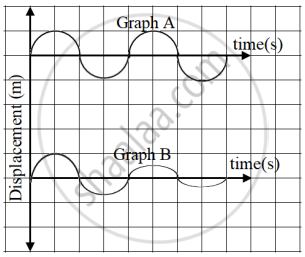
(a) Which one of the following graphs A or B shows free vibrations in a vacuum and which one shows free vibrations in a medium?
(b) How did you come to this conclusion.
Where can a body execute natural vibrations?
