Advertisements
Advertisements
Question
Explain whether a gas approaches ideal behavior or deviates from ideal behaviour if it is compressed to a smaller volume at a constant temperature.
Advertisements
Solution
When the gas is compressed to a smaller volume, the compressibility factor (Z) decreases. Hence, the gas deviates from ideal behavior.
APPEARS IN
RELATED QUESTIONS
Calculate the volume occupied by 8.8 g of CO2 at 31.1°C and 1 bar pressure. R = 0.083 bar L K–1 mol–1.
The value of the universal gas constant depends upon
Compressibility factor for CO2 at 400 K and 71.0 bar is 0.8697. The molar volume of CO2 under these conditions is
Which of the following diagrams correctly describes the behaviour of a fixed mass of an ideal gas? (T is measured in K)
25 g of each of the following gases are taken at 27°C and 600 mm Hg pressure. Which of these will have the least volume?
Can a Van der Waals gas with a = 0 be liquefied? explain.
Explain whether a gas approaches ideal behavior or deviates from ideal behaviour if more gas is introduced into the same volume and at the same temperature.
Write the Van der Waals equation for a real gas. Explain the correction term for pressure and volume.
If 1 gram of each of the following gases are taken at STP, which of the gases will occupy (a) greatest volume and (b) smallest volume?
\[\ce{CO, H2O, CH4 , NO}\]
Match the following graphs of ideal gas with their co-ordinates:
| Graphical representation | x and y co-ordinates |
(i) 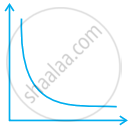 |
(a) pV vs. V |
(ii)  |
(b) p vs. V |
(iii)  |
(c) p vs. `1/V` |
