Advertisements
Advertisements
Questions
Explain the process of aminoacylation of tRNA and its role in the process of translation.
How and why is charging of tRNA essential in the process of translation?
Advertisements
Solution
The process of polymerizing amino acids to create polypeptides is referred to as translation. The nucleotides in the mRNA's sequence determine the order and sequence of amino acids. Peptide bonds, which connect the amino acids, are ultimately hold them together. Energy is needed for peptide bond formation. As a result, during the first phase alone, amino acids are activated in the presence of ATP and connected to their corresponding tRNAs, a process known as charging of tRNA or, to be more precise, aminoacylation of tRNA. It would be energetically advantageous for two of these charged tRNAs to create a peptide bond if they were placed close enough to each other side. A catalyst would speed up the process of peptide bond formation.
RELATED QUESTIONS
Briefly describe the following:
Translation
The three codons which result in the termination of polypeptide chain synthesis are ______.
During translation, activated amino acids get linked to tRNA. This process is commonly called as ______.
UTRs are the untranslated regions present on ______.
Which cellular process is shown below?
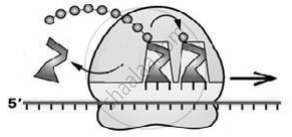
How does initiation of the translation process occur in prokaryotes? Explain.
Which of the following is the start codon in translation?
What are the three stop codons that signal the termination of translation?
During the elongation stage of translation, what ensures that the correct amino acid is placed in the sequence?
Which site on the ribosome holds the peptidyl-tRNA during translation?
