Advertisements
Advertisements
Question
Explain the following sign using to+ verb :

You are not allowed ____________ your vehicles here.
Advertisements
Solution
You are not allowed to park your vehicles here.
APPEARS IN
RELATED QUESTIONS
Underline the present participle and circle the noun it describes in the
following sentences as shown in the example above.
a) The policeman saw a thief escaping on a motorbike.
b) Hearing a loud sound, the students rushed out of the classroom.
c) I can hear the school choir practicing in the auditorium.
d) The player was happy seeing that his opponent was growing tired.
Now combine the following pair of sentence using a suitable verb in its
'ing' form.
Our neighbours made a lot of noise. They apologised.
Now combine the following pair of sentence using a suitable verb in its
'ing' form.
Murari passed the examination. I congratulated him.
Why don’t you try?
Give the solution to the problem below using the ‘ing’ form of the verb. Make the solution as unusual as possible.
There’s a fly in my soup.
Why don’t you try ______?
Why don’t you try?
Give the solution to the problem below using the ‘ing’ form of the verb. Make the solution as unusual as possible.
My car isn’t starting.
Why don’t you try ______?
Explain the following sign using to+ verb :
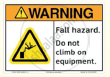
________________________________________
Work in pair. One of you will ask the question, the other will give the answer with the help of the clue in bracket. Write down in the spaces provided.
- Why are you waiting here? (meet the teacher)
- __________________________________________
Work in pair. One of you will ask the question, the other will give the answer with the help of the clue in bracket. Write down in the spaces provided.
- Why did you return home early? (help with the housework)
- _______________________________________________________
Work in pair. One of you will ask the question, the other will give the answer with the help of the clue in bracket. Write down in the spaces provided.
- Why is Raju going abroad? (visit his sister)
- ______________________________________________
Work in pair. One of you will ask the question, the other will give the answer with the help of the clue in bracket. Write down in the spaces provided.
- Why did you travel by bus? (save money)
- ____________________________________________
Look at the picture. Describ picture with an appropriate non-finite as shown. Try not to repeat the verb .
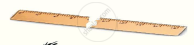
- ________________________
Look at the picture. Describ picture with an appropriate non-finite as shown. Try not to repeat the verb .

- ____________________________
Look at the picture. Describ picture with an appropriate non-finite as shown. Try not to repeat the verb .

- ______________________________
Look at the picture. Describ picture with an appropriate non-finite as shown. Try not to repeat the verb .

- ________________________
Study the following table
| with verb+ing | with to+verb | ||
| Avoid | imagine | agree | learn |
| Consider | involve | allow | manage |
| delay | prevent | ask | promise |
| deny | resent | decide | refuse |
| excuse | risk | expect | seem |
| mind | enjoy | fail | want |
| favour | stop | intend | wish |
| finish | suggest | ||
Now complete the following sentences appropriately using 'ing' or
infinitive construction. Use the grid given above to write your answers.
You may have to add prepositions in some sentences.
1) Would you mind______________________________________
2) Most children enjoy___________________________________
3) I'll never forget ___________ when I was 18 years old.
4) I remember_________________________________________
5) Our teacher dislikes__________________________________
6) The commander told the soldiers________________
7) I do not intend________________________________
8) The inspector is certain______________________
9) My father was vecy angry with the grocer ________________
10) My brother likes________________________________
Complete the sentences using the correct non-finite form of the verbs
given in brackets.
1. I regret (be) rude to you.
2. I regret _______ (inform) you that you have not qualified in
the interview.
3. I want to stop now ____ (eat) lunch.
4. I must stop ______ (eat) so much.
5. It was rude of him ____ (say) that.
Correct the following sentence :
- I am hopeful to secure full marks in the Mathematics paper.
Correct the following sentence :
- You had better to send your application by fax.
Make a list of four things you remember doing as a young child •
- _________________________________________________________________
- _________________________________________________________________
- _________________________________________________________________
- _________________________________________________________________
Now, make a list of things you must remember to do this coming week •
- _________________________________________________________________
- _________________________________________________________________
- _________________________________________________________________
- _________________________________________________________________
