Advertisements
Advertisements
Question
Advertisements
Solution
The flask consists of a double-walled glass container with a vacuum between the walls A and B. The inner side of A and the outer side of B are silvered. It has a narrow mouth which is closed by a non-conducting rubber stopper.
If a hot liquid is placed inside the flask, it cannot lose heat by conduction or convection, as there is no air between the walls. The small amount of heat lost from the liquid by radiation is reflected back into the liquid by silvering of the inner wall A and any radiation striking the outer wall B, is reflected back and prevented from reaching the liquid.
APPEARS IN
RELATED QUESTIONS
Write down the temperature of the lower fixed point on the Fahrenheit scale.
Who am I?
I’m found in a thermometer, I measure your temperature.
A small gap is left between two iron rails of the railway track. Why?
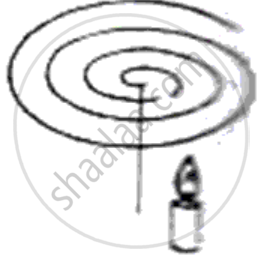
A spiral cut from a thick chart paper is pivoted at 0 and is held slightly above a burning candle You will notice that the spiral starts moving. Explain.
Where am I?
The isotherm 0°C runs in my surroundings.
One litre of water at 30o C is mixed with one litre of water at 50o C. The temperature of the mixture will be
Analogy
Ice cube : 0o C :: Boiling water :______
What is the concept of temperature?
