Advertisements
Advertisements
Question
Discuss how the essay reveals the factual points and the author’s personal opinions on the preparation of tea.
Advertisements
Solution
The author’s opinion: The maimer of making the nicest cup of tea is the subject matter of violent disputes. China tea doesn’t give stimulation, wisdom, bravery, or optimism. Indian tea means ‘a nice cup of tea’. The army tea tastes grease and whitewash. The method of swilling tea out with hot water is not a good practice. One strong cup of tea is better than twenty weak ones. One can swallow considerable quantities of tea. One should take the teapot to the kettle and not the other way about. If you use already boiled water or freshly brought it to boil does not make any difference in the taste of tea. One should remove the cream off before adding the milk to tea. By putting tea leaves in first and stirring them as one pours milk one can regulate the amount of milk. Tea must be drunk without sugar for enjoying the real flavor and taste.
APPEARS IN
RELATED QUESTIONS
Life is full of ups and downs. It has pleasant surprises as well as rude shocks. Nevertheless, every incident offers a lesson for us to learn and evolve into better individuals.
Why did the author avoid going to Lucia’s room?
What message is conveyed through the story ‘Two Gentlemen of Verona’?
According to the author, what does the phrase ‘a nice cup of tea’ refer to?
Why does the author refer to himself as being in ‘a minority’?
What are the author’s views on China tea?
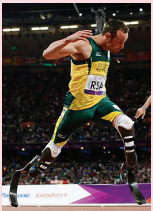
There are several physically-challenged people who have lived successful and meaningful lives. Here are a few personalities who have fought great odds and lived a life of blazing achievements. Let’s share what we know about each of them and complete the table below.
| Name of the personality | Nature of challenge | Field of achievement |
| e.g. Beethoven | Hearing impairment | Music |
| Demosthenes | ||
| Helen Keller | ||
| Mariyappan Thangavelu | ||
| Mozart | ||
| John Milton | ||
| Sudha Chandran |
What were Dr. Barnard’s feelings when he was hospitalized after an accident?
Adventures, expeditions, and explorations are always exciting. Especially when they are real and if it is the first of its kind, it is even more thrilling. The only question that comes to one’s mind is what makes one to take up such tasks that involve high risks. It is the spirit of formidable adventure and certain qualities which make them achieve such feats.
Name an equipment and a tool carried by the climbers during their expedition.
What did Hillary find in a tiny hollow?
Why was the original zest fading away?
What did Tenzing and Edmund Hillary gift to the Gods of lofty Summit? How did they do it?
The soft snow was difficult and dangerous. Why?
What was Pedanna’s suggestion to their father?
What was offered to Maamanaar by their mother?
Why were the two chairs compared to Rama-Lakshmana?
Why did the family find it difficult to make a chair?
What was grandmother’s suggestion of wood? Why?
Narrate the humorous incidents that happened in the author’s home before and after the arrival of the chair.
From the pictures given below, identity the actions that may cause inconvenience and discomfort to others. Discuss.

Classify these pictures to show what they depict–Personal freedom/Public liberty.
| Personal freedom | Public liberty |
| colouring the hair red | |
What does the ‘rule of the road’ mean?
According to the author, what are we more conscious of?
How would ‘liberty’ cause universal chaos?
Can you iron your clothes and arrange them? Can you replace a tube light?
Solve the clues given below and complete the cross word

| Across | Down |
| 1.You can watch programmes, matches and news on it | 1. You can sit around it |
| 4. You can lie on this and sleep | 2. You can put flowers in this |
| 6.You can sit on this and relax by yourself | 3. You can sit on this with two other people comfortably |
| 11.You can store all your books here | 5. You can do your writing work on this |
| 12.This can give you light when it is dark | 7. This can cover a small space and decorate the floor |
|
8. You can put all your clothes in here
|
|
|
9. You can look into this to see yourself |
|
|
10. You can sit on this, it has 3 legs. |
