Advertisements
Advertisements
Question
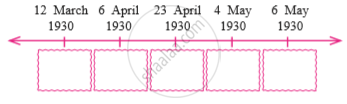
Complete the following timeline of Civil Disobedience Movement.
Advertisements
Solution
- 12 March 1930: Beginning of the Salt March from Sabarmati Ashram.
- 6 April 1930: End of Salt March at Dandi.
- 23 April 1930: Arrest of Khan Abdul Gaffar Khan, leader of the Khuda I Khidmatgar movement.
- 4 May 1930: Gandhiji was arrested under the regulation of 1827 at Karadi near Dandi.
- 6 May 1930: A severe outburst of people regarding the arrest of Gandhiji killed 20 people.
RELATED QUESTIONS
State any two causes that led to the Civil Disobedience Movement in 1930.
Khan Abdul Gafar Khan established the organisation named ______.
Answer the following question in 25 to 30 words.
Why did Gandhiji decide to break the Salt Act to begin the satyagraha all over the country?
Gather additional information along with photographs about the work of the following personality in the Civil Disobedience Movement and exhibit it in the class.
Sarojini Naidu:
Why was the Dandi March important in the history of the National Movement?
Why was the Simon Commission set-up? Why was the Commission so called?
Mention any two events which led to the Civil Disobedience Movement of 1930.
Why was the ‘Civil Disobedience Movement’ of March 1930, withdrawn?
Or
What assurance did Gandhiji withdraw the Civil Disobedience Movement.
The Civil Disobedience Movement was significant in the history of the National Movement. With-reference to this movement, write short notes on the circumstances leading to Civil Disobedience Movement.
Gather additional information along with photographs about the work of the following personality in the Civil Disobedience Movement and exhibit it in the class.
Babu Genu:
