Advertisements
Advertisements
Question
Arrange the following ratios in ascending order of magnitude: 2 : 3, 17 : 21, 11 : 14 and 5 : 7
Advertisements
Solution
Writing the given ratios in fraction
`(2)/(3), (17)/(21), (11)/(14), (5)/(7)`
LCM of 3, 21, 14, 7 = 42
Converting the given ratio as equivalent
`(2)/(3) = (2 xx 14)/(3 xx 14) = (28)/(42) ; (17)/(21) = (17 xx 2)/(21 xx 2) = (34)/(42)`
`(11)/(14) = (11 xx 3)/(14 xx 3) = (33)/(42) ; (5)/(7) = (5 xx 6)/(7 xx 6) = (30)/(42)`
From above, writing in asecnding order,
`(28)/(42), (30)/(42), (33)/(42), (34)/(42)`
or
`(2)/(3), (5)/(7), (11)/(14), (17)/(21)`
or
2 : 3 ; 5 : 7 ; 11 : 14 and 17 : 21.
APPEARS IN
RELATED QUESTIONS
A school has 630 students. The ratio of the number of boys to the number of girls is 3 : 2. This ratio changes to 7 : 5 after the admission of 90 new students. Find the number of newly admitted boys.
Express the following ratios in its simplest form :
`2 1/3 : 3 1/2: 1 1/4`
Find the ratio between 3.5 m, 475 cm and 2.8 m
Find the mean proportion between 0.06 and 0.96
Find the reciprocal ratio of `(1)/(9) : 2`
Two numbers are in the ratio 11 : 12 and their sum is 460. Find the numbers.
I have a box which has 3 green, 9 blue, 4 yellow, 8 orange coloured cubes in it.
(a) What is the ratio of orange to yellow cubes?
(b) What is the ratio of green to blue cubes?
(c) How many different ratios can be formed, when you compare each colour to anyone of the other colours?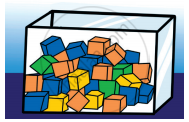
3 : 33 = 33 : 333
Saturn and Jupiter take 9 hours 56 minutes and 10 hours 40 minutes, respectively for one spin on their axes. The ratio of the time taken by Saturn and Jupiter in lowest form is ______.
The ratio of 60 to 48, when reduced to its simplest form, is:
