Advertisements
Advertisements
Question
Animal waste, oil and urea are some of the organic impurities present in sewage. Name two more organic impurities present in sewage.
Advertisements
Solution
Pesticides and fruits and vegetable wastes are organic impurities present in sewage.
APPEARS IN
RELATED QUESTIONS
Why is water very precious for all living being ?
Name the gas produced when fossil fuel is burnt.
Give one word for the following statement:
The harmful substances dissolved in water .
Give one word for the following statement :
The change of states of water from one form to another .
Give one word for the following statement:
The gaseous form of water found in air .
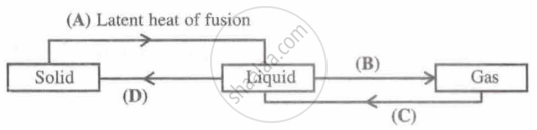
Identify A, B, C and D; first one is done for you.
Explain why rivers and lakes do not freeze easily.
Explain why:
If distilled water is kept in a sealed bottle for a long time, it leaves etchings on the surface of the glass.
Answer in your own words.
Why is there a shortage of water even though it occupies about 71% of the earth’s surface?
State what is potable water. Give its qualities or characteristics which make it fit for human consumption.
Give a balanced equation for the following conversion:
Calcium sulphate in permanent hard water to calcium carbonate using sodium carbonate.
What happens when a spoonful of sugar, sawdust, and soil are added to a glass of water?
Which are the three states of water?
Write a few slogans of your own on the topic “Save Water”
Look at the map of Tamilnadu showing annual rainfall and answer the questions given below

- Identify the districts that get only low annual rainfall in Tamilnadu.
- Identify the districts that get a medium annual rainfall in Tamilnadu.
- State the districts that enjoy high annual rainfall in Tamilnadu.
A jumbled word is given here. Write the correct form of the word.
QUIFERA
Match the items of Column I with the items of Column II with reference to sewage.
| Column I | Column II | ||
| (a) | Inorganic impurities | (i) | phosphorus and nitrogen |
| (b) | Organic impurities | (ii) | nitrates and phosphates |
| (c) | Nutrients | (iii) | cholera and typhoid |
| (d) | Bacteria | (iv) | pesticides and herbicides |
What is water?
What is saltwater?
Why is there a need for conserving water? Give two reasons.
