Advertisements
Advertisements
Question
What is the source of water in the following?
Wells
Advertisements
Solution
Wells – Groundwater
APPEARS IN
RELATED QUESTIONS
Name the gas produced when chlorine is dissolved in water and exposed to sunlight.
Give reason of Carbonated drinks are bottled under high pressure.
What are its causes and how can water pollution be controlled ?
Explain rain water harvesting.
What causes the violence associated with torrential rain?
State the importance of the solubility of CO2 and O2 in water.
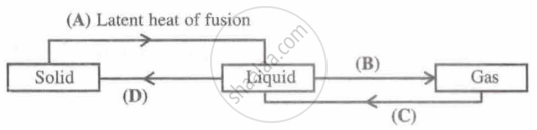
Identify A, B, C and D; first one is done for you.
What do you understand by Temporary hardness?
Household detergents contain mainly ______ and pollute water bodies.
Explain the following observation:
Washing-soda become coated with a white powder when left exposed to the atmosphere.
Select the correct word from the words in option to complete the sentence:
If pressure on the surface of water increases its boiling point ____ and freezing point ____.
______ plays a vital role in the evolution and survival of life.
Among the given options, which one is not correct for the use of large amounts of fertilisers and pesticides?
Rivers from land, add minerals to seawater. Discuss how?
State whether the following statement is True or False. If false, write the correct statement.
Rapid growth of industries is one of the causes for water shortage
State whether the following statement is True or False. If false, give the correct statement.
51% of the earth’s surface is covered with water
A jumbled word is given here. Write the correct form of the word.
QUIFERA
Write any two activities which require more than a bucket of water.
Dissolve two spoons of common salt in half a cup of water. Now if you want to get the salt back, what will you do?
Construct a crossword puzzle of your own using the keywords.
