Advertisements
Advertisements
Question
An electron’s mass is approximately 9.1093826 × 10⁻³¹ kilograms. What is this mass in grams?
Advertisements
Solution
Mass of electron = 9.1093826 × 10⁻³¹ kg
= 9.1093826 × 10–31 × 1000 g ...[∵ 1 kg = 1000 g]
= 9.1093826 × 10–31 × 103 ...[∵ am × an = (a)m + n]
= 9.1093826 × 10⁻²⁸ g
APPEARS IN
RELATED QUESTIONS
Find the value of `1/(3^(-2))`.
The value of `1/4^-2` is ______.
The value of 35 ÷ 3–6 is ______.
329.25 = 3 × 10² + 2 × 101 + 9 × 100 + 2 × 10⁻¹ + 5 × 10⁻²
Simplify:
`(49 xx z^-3)/(7^-3 xx 10 xx z^-5) (z ≠ 0)`
Find the value of x so that (2–1 + 4–1 + 6–1 + 8–1)x = 1
Find a single repeater machine that will do the same work as hook-up.

Find a single repeater machine that will do the same work as hook-up.
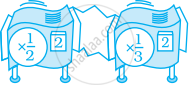
For hook-up, determine whether there is a single repeater machine that will do the same work. If so, describe or draw it.

Find x.
`((-6)/7)^(x - 7) = 1`
