Advertisements
Advertisements
Write the IUPAC name of the following compound:
\[\begin{array}{cc}
\ce{H3C - CH - CH2 - CH - CH - CH2 - CH3}\\
|\phantom{....................}|\phantom{.........}|\phantom{.............}\\
\ce{OH}\phantom{................}\ce{OH}\phantom{...}\ce{C{_2}H5}\phantom{.........}\\
\end{array}\]
Concept: undefined >> undefined
Write the IUPAC name of the following compound:
\[\begin{array}{cc}
\ce{CH3 - CH - CH - CH3}\\
|\phantom{.........}|\phantom{...}\\
\ce{OH}\phantom{....}\ce{OH}\\
\end{array}\]
Concept: undefined >> undefined
Advertisements
Write the IUPAC name of the following compound:
\[\begin{array}{cc}
\ce{HO - CH2 - CH - CH2 - OH}\\
|\phantom{...}\\
\ce{OH}\phantom{.}\\
\end{array}\]
Concept: undefined >> undefined
Write the IUPAC name of the following compound:

Concept: undefined >> undefined
Write the IUPAC name of the following compound:
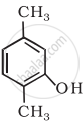
Concept: undefined >> undefined
Write IUPAC name of the following compound:

Concept: undefined >> undefined
Write the IUPAC name of the following compound:

Concept: undefined >> undefined
Write the IUPAC name of the following compound:
\[\begin{array}{cc}
\ce{CH3 - O - CH2 - CH - CH3}\\
\phantom{................}|\\
\phantom{....................}\ce{CH3}
\end{array}\]
Concept: undefined >> undefined
Write the IUPAC name of the following compound:
C6H5 – O – C2H5
Concept: undefined >> undefined
Write the IUPAC name of the following compound:
C6H5 – O – C7H15(n−)
Concept: undefined >> undefined
Write the IUPAC name of the following compound:
\[\begin{array}{cc}
\ce{CH3 - CH2 - O - CH - CH2 - CH3}\\
\phantom{....}|\\
\phantom{........}\ce{CH3}
\end{array}\]
Concept: undefined >> undefined
Write structures of the compounds whose IUPAC names are as follows:
3-Chloromethylpentan-1-ol.
Concept: undefined >> undefined
- Draw the structures of all isomeric alcohols of molecular formula C5H12O and give their IUPAC names.
- Classify the isomers of alcohols in the above question as primary, secondary and tertiary alcohols.
Concept: undefined >> undefined
Give the IUPAC name of the following ether:
\[\begin{array}{cc}
\ce{C2H5OCH2 - CH - CH3}\\
\phantom{.........}|\\
\phantom{.............}\ce{CH3}
\end{array}\]
Concept: undefined >> undefined
Give the IUPAC name of the following ether:
CH3OCH2CH2Cl
Concept: undefined >> undefined
Give the IUPAC name of the following ether:
O2N – C6H4 – OCH3(p)
Concept: undefined >> undefined
Give the IUPAC name of the following ether:
CH3CH2CH2OCH3
Concept: undefined >> undefined
Give the IUPAC name of the following ether:

Concept: undefined >> undefined
Give the IUPAC name of the following ether:

Concept: undefined >> undefined
Write the structure of the following compound:
2-Chloro-3-methylpentane
Concept: undefined >> undefined
