Please select a subject first
Advertisements
Advertisements
Define the following:
Hypertonic solution
Concept: Osmotic Pressure
Distinguish between the following:
Hypotonic and Hypertonic solutions
Concept: Osmotic Pressure
Define the cohesive force.
Concept: Osmotic Pressure
What is the water potential?
Concept: Osmotic Pressure
Differentiate between the following:
Plasmolysis and Deplasmolysis.
Concept: Turgidity and Flaccidity (Plasmolysis)
Explain the Term:
Osmosis
Concept: Osmotic Pressure
Deplasmolysis occurs when a plasmolysed cell is placed in ______.
Concept: Turgidity and Flaccidity (Plasmolysis)
Arrange and rewrite the terms in the group in the correct order to be in a logical sequence beginning with the term that is underlined:
Xylem, Soil water, Cortical cells, Root hair.
Concept: Characteristics of Roots for Absorbing Water
Excessive use of fertilisers in agricultural fields reduces the yield of crops. Justify the statement.
Concept: Turgidity and Flaccidity (Plasmolysis)
What is Active transport?
Concept: Absorption and Conduction of Water and Minerals >> Active Transport
Name the following:
Unicellular outgrowths from the epidermis of roots.
Concept: Concept of Absorption by the Roots
Arrange and rewrite the terms in group in correct order to be in a logical sequence, beginning with the term that is underlined:
Water vapour, Soil water, Leaves, Ascent of Sap.
Concept: Forces Contributing to Ascent of Sap
Mention two adaptations in roots for absorption of water from the soil.
Concept: Characteristics of Roots for Absorbing Water
During a practical exam, a plant cell in a particular solution was placed under a compound microscope. Students were told to observe the cell and name the tonicity of the solution and mention the process that occurred in the cell.
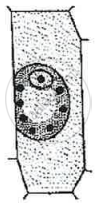
Concept: Osmotic Pressure
Explain the term Active transport.
Concept: Absorption and Conduction of Water and Minerals >> Active Transport
Mention one characteristic of roots for absorbing water from the soil.
Concept: Characteristics of Roots for Absorbing Water
The given statement is incorrect. Rewrite the correct statement:
Fresh water fish when placed in hypertonic salt solution absorb water and burst.
Concept: Osmotic Pressure
Define the following term:
Imbibition
Concept: Imbibition
Choose the correct answer from the four options given below :
Which one of the following does not affect the rate of transpiration ?
Concept: Factors Affecting the Rate of Transpiration
Expand the following biological abbreviations :
(i) ABA
Concept: Factors Affecting the Rate of Transpiration
