Advertisements
Advertisements
प्रश्न
Which would undergo SN2 reaction faster in the following pair and why ?
CH3 – CH2 – Br and CH3 – CH2 – I
Advertisements
उत्तर
CH3 – CH2 – I would undergo an SN2 reaction faster than CH3 – CH2 – Br. Since iodine is a better leaving group because of its large size, it will be released at a faster rate in the presence of an incoming nucleophile as compared to bromine.
APPEARS IN
संबंधित प्रश्न
Write the structure of the major product in each of the following reaction :

What happens when methyl chloride is treated with KCN?
The stability order for carbocation is _______.
(A) 2° > 3° > 1°
(B) 3° > 2° > 1°
(C) 3° > 1° > 2°
(D) 1° > 3° > 2°
What is the action of the following on ethyl bromide
alcoholic solution of potassium hydroxide.
Among the following, the dissociation constant is highest for:
Cyanide ion acts as an ambident nucleophile. From which end it acts as a stronger nucleophile in aqueous medium? Give reason for your answer.
Give the mechanism of the following reaction:
\[\ce{CH3CH2OH ->[H2SO4][413 K] CH3CH2-O-CH2CH3 + H2O}\]
Discuss SN2 mechanism of methyl bromide using aqueous KOH.
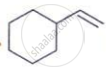 HCI, Major product ______.
The compound that will undergo SN1 reaction with the fastest rate is:
