Advertisements
Advertisements
प्रश्न
What was Maya doing on her unexpected holiday?
Advertisements
उत्तर
On her unexpected holiday, Maya assigned herself the task of solving the mystery ot Mr Nath. She was busy noting down all the available facts about Mr Nath. She then shared with his brother and asked for his opinion.
संबंधित प्रश्न
Answer these question in a few word or a couple of sentences .
How old are Margie and Tommy?
Here are some words with silent letters. Learn their spelling. Your teacher will dictate these words to you. Write them down and underline the silent letters.
| knock | wrestle | walk | wrong |
| knee | half | honest | daughter |
| hours | return | hornet | calm |
| could | sign | island | button |
Now fill in the blanks with suitable words from the ones that you have formed.
(i) Mass literacy was possible only after the ___________ of the printing machine.
(ii) Ramesh is unable to tackle the situation as he lacks ____________.
(iii) I could not resist the _____________ to open the letter.
(iv) Hardwork and ___________are the main keys to success.
(v) The children were almost fainting with ______________after being made to stand in the sun.
Complete the following statement.
From her room in Kasturba Hostel, Santosh used to _________
Pick out word from the text that mean the same as the following word or expression. (Look in the paragraph indicated.)
took to be true without proof : _________
Answer the following question in one or two sentences.
How did Abdul Kalam earn his first wages?
In groups of six, work on one of the mysteries given below by surfing the net and through other sources. Create a power point presentation/a photo essay.
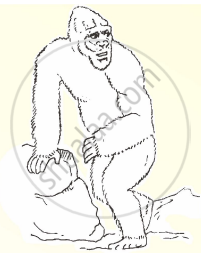
- Yeti, the abominable snowman
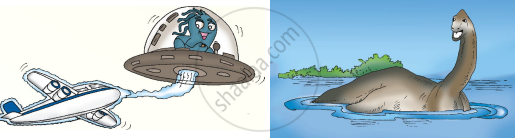
- Loch Ness Monster
- UFOs (Unidentified Flying Objects)
- Lost city of Atlantis
- Crop circles
- Nazca lines
Bangle sellers are we who bear
Our shining loads to the temple fair...
Who will buy these delicate, bright
Rainbow-tinted circles of light?
Lustrous tokens of radiant lives,
For happy daughters and happy wives.
Read the lines given above and answer the question that follow.
What is the tone in this stanza? Quote.
"My father lived at Blenheim then,
Yon little stream hard by;
They burnt his dwelling to the ground,
And he was forced to fly;
So with his wife and child he fled,
Nor had he where to rest his head.
"With fire and sword the country round
Was wasted far and wide,
And many a childing mother then,
And new-born baby died;
But things like that, you know, must be
At every famous victory;
Read the lines given above and answer the question that follow.
Kaspar describes the horrors of war but how can his attitude be described?
“If you are rested I would go,” I urged. “Get up and try to walk now.”
“Thank you,” he said and got to his feet, swayed from side to side and then sat down backwards in the dust.
“I was taking care of animals,” he said dully, but no longer to me. “I was only taking care of animals.”
There was nothing to do about him. It was Easter Sunday and the Fascists were advancing toward the Ebro. It was a grey overcast day with a low ceiling so their planes were not up. That and the fact that cats know how to look after themselves was all the good luck that the old man would ever have.
Read the extract given below and answer the question that follow.
When the narrator spoke to the old man about the pigeon cage, what does this reveal about him?
Read the extract given below and answer the questions that follow:
All that year the animals worked like slaves. But they were happy in their work, they grudged no effort or sacrifice, well aware that everything that they did was for the benefit of themselves and those of their kind who would come after ·them and not for a pack of idle thieving human beings. Throughout the spring and summer, they worked a sixty-hour week, and in August ...............
(i) What did Napoleon announce in August?
(ii) How much time had elapsed since the constitution of the Animal Farm? As summer wore on, what unforeseen shortages began to be felt?
(iii) What new policy did Napoleon make? The new • policy brought a vague uneasiness among the animals. What did they recall?
(iv) Who had agreed to act as an intermediary between the Animal Farm and the outside world ' Describe him?
(v) What roused the pride of the animals and made them reconcile to the new arrangement? In the meanwhile, what sudden decision was taken by the pigs? What do we learn about Napoleon at this juncture?
Why was everyone in the Control Room greatly excited?
The last two lines of the poem are not prohibitions or instructions. What is the adult now asking the child to do? Do you think the poet is suggesting that this is unreasonable? Why?
What happens when the winds blow?
Make noun from the word given below by adding –ness, ity, ty or y
Creative___________.
Why did the dog prefer a strong master to live in the jungle?
With your partner, complete the following sentence in your own word using the ideas in the poem.
Words are the __________________ of thought.
Each of the following words contains the sound ‘sh’ (as in shine) in the beginning or in the middle or at the end. First speak out all the words clearly. Then arrange the words in three groups in the table below
sheep trash marsh fashion
anxious shriek shore fish
portion ashes sure nation
shoe pushing polish moustache
| initial | medial | final |
The words helper, companion, partner and accomplice have very similar meanings, but each word is typically used in certain phrases. Can you fill in the blanks below with the most commonly used words? A dictionary may help you.
business ……………
What special ‘deed of gift’ does Jessica give to Lorenzo at the end of the play?
