Advertisements
Advertisements
प्रश्न
The story begins and ends with Iona and his horse. Comment on the significance of this to the plot of the story.
Advertisements
उत्तर
The story is a satire on how disengaged humans are that one has to find a true companion in an animal. Iona from the beginning of the story is portrayed with his horse. In the beginning, while Iona is struck with his loss and is melancholic, he and his horse stood unmoved. It appeared that they both shared similar grief. Both seemed unaware of their surroundings and of the heavy snow, the horse for being a slave animal, and Iona due to his grief. The story narrates how Iona lashes his frustration by brandishing the horse unnecessarily, yet the horse is faithful to his master. Even by the end of the story, Iona is left unheard and his heavy heart knows no one to release his burden to. He finds solace in the company of his horse again. He goes up to him and gives him hay to munch. While he goes on speaking to the silent animal explaining how he lost his young son. He grieved, now that he is old and poor, to make things worse, he will be having trouble earning. The animal, not sure if understood what his master said, remained silent and heard it all peacefully proving its faithfulness to his master.
APPEARS IN
संबंधित प्रश्न
How does Anne criticize the attitude of the grown-ups in her diary?
How important was the presence of Miss Anne Sullivan in Helen’s life?
Read the passage given below and answer the questions that follow:
The term dietary fibres refers collectively to indigestible carbohydrates present in plant foods. The importance of these dietary fibres came into the picture when it was observed that the people having diet rich in these fibres, had low incidence of coronary heart disease, irritable bowel syndrome, dental caries and gall stones.
The foodstuffs rich in these dietary fibres are cereals and grains, legumes, fruits with seeds, citrus fruits, carrots, cabbage, green leafy vegetables, apples, melons, peaches, pears etc.
These dietary fibres are not digested by the enzymes of the stomach and the small intestine whereas most of other carbohydrates like starch and sugar are digested and absorbed. The dietary fibres have the property of holding water and because of it, these get swollen and behave like a sponge as these pass through the gastrointestinal tract. The fibres add bulk to the diet and increase transit time in the gut. Some of these fibres may undergo fermentation in the colon.
In recent years, it has been considered essential to have some amount of fibres in the diet. Their beneficial effects lie in preventing coronary heart disease, and decreasing cholesterol level. The fibres like gums and pectin are reported to decrease postprandial (after meals) glucose level in blood. These types of dietary fibres are recommended for the management of certain types of diabetes. Recent studies have shown that the fenugreek (Methi) seeds, which contain 40 per cent gum, are effective in decreasing blood glucose and cholesterol levels as compared to other gum containing vegetables.
Some dietary fibres increase transit time and decrease the time of release of ingested food in colon. The diet having less fibres is associated with colon cancer and the dietary fibres may play a role in decreasing the risk of it.
The dietary fibres hold water so that stools are soft, bulky and readily eliminated. Therefore high fibre intake prevents or relieves constipation.
The fibres increase motility of the small intestine and the colon and by decreasing the transit time there is less time for exposure of the mucosa to harmful toxic substances. Therefore, there is a less desire to eat and the energy intake can be maintained within the range of requirement. This phenomenon helps in keeping a check on obesity. Another reason in helping to decrease obesity is that the high-fibre diets have somewhat lower coefficients of digestibility.
The dietary fibres may have some adverse effects on nutrition by binding some trace metals like calcium, magnesium, phosphorus, zinc and others and therefore preventing their proper absorption. This may pose a possibility of nutritional deficiency especially when diets contain marginal levels of mineral elements. This may become important constraints on increasing dietary fibres. It is suggested that an intake of 40 grams dietary fibres per day is desirable.
(Extracted from ‘The Tribune’)
(a) On the basis of your reading of the above passage make notes on it in points only, using recognizable abbreviations wherever necessary. Also suggest a suitable title. (5)
(b) Write a summary of the above in about 80 words. (3)
The three stanzas depict three different phases. What are they?
Briefly explain the following statement from the text.
“The lack of determinism in quantum theory!”
Explain the associations that the colour 'white' has in the story.
Narrate 'The Tale of Melon City' in your own words.
How have the three passions contributed to the quality of Russell's life?
How do the words in bold, in the lines below, illustrate the poet’s ability to convey criticism cryptically?
Our meddling intellect
Misshapes the beauteous forms of things:
We murder to dissect.
How does the poem capture the elusive nature of the peacock?
What does the line 'I never writ, nor no man ever loved' imply?
What is the central argument of the speaker?
What is the emphasis placed by Ruskin on accuracy?
What do the references to the birds and animals made in the poem suggest?
Read the following statement and mark those that apply to you.
Someone has extended a hand of friendship towards me and I have not accepted it.
An acrostic is a poem or a write· up in which the first letter of each line forms a word. when it is read vertically.
For example,
Faithful
Reliable
Inspiring
Encouraging
Noble
Dedicated
With your benchmate / group, complete the acrostic of BELIEVE and FAITH.
(Please note that the words / phrases should be more or less related to the topic. You can use a thesaurus.)
Be certain of
E ......................
L ......................
I ......................
E ......................
V ......................
E ......................
F ......................
A ......................
I ......................
T ......................
H ......................
Make sentence of your own using the following expression.
bargain:
complete the following sentence.
Ajoy reported about ________________.
Using points from the lesson, give the details of the following in a short paragraph.
International Kite Festival at Ahmedabad.
Write 3 to 4 lines about the following in your own words.
First Neurosurgeon
Form suitable groups and discuss the following.
You have heard/read stories of Akbar and Birbal, Tenali Raman, Mulla Nasruddin. Recollect and write down the names of those stories.
Pick out those aspects of a story that you find a common in all their stories.
- Humour
- Supernatural event
- Wisdom
- Suspense
- Magic
- Beauty of Nature
- Wit
- Play upon words
- Sadend
- Violence
Answer the following question in short.
Why was Tenali Raman summoned to the court?
Compare the features of a comedy and tragedy.
Differentiate between characters and characterization.
Portia had many brothers and sisters.
Complete the following diagram.

In the last stanza, there are three four-letter words that refer to a beautiful valley.
They are: • ______ • ______ • ______
How was Gulliver taken to the city?
Write a short note/story based on the ill effects of pollution.
- Form groups of 5–8. Then make pairs of groups. Decide which group will be hosts and which will be guests. Arrange mock parties in the classroom so that the roles of hosts and guests can actually be played out.
- Later on, hold groupwise discussions on how your party went. Make lists of the tips you followed and those you forgot to follow.
Which event in the story tells us that the scarecrow was intelligent?
Look at the following expressions from the text. With the help of your teacher rewrite them in standard English. One has been done for you.
| 1. ‘Musta got away – whatt’d he like? | Must got away - what was he like?’ |
| 2. ‘Looky here, Joe | |
| 3. ‘No sign o’ nothing’ | |
| 4. ‘Back t’ the lines ye goodaam | |
| 5. ‘What was the idea of all them cops tarryhootin’ round the house last night. |
Departure was delayed because of the author.
Read the following line from the poem and answer the question given below.
Let us learn to walk with a smile and a song,
No matter if things do sometimes go wrong;
- What does the poet expect everyone to learn?
- What should we do when things go wrong sometimes?
“Was it just the wind?”– What do you think Usha thought it was? Why?
Let no ______ tone be______.
- soft
- vain
- fear
- joy
- love
- heard
- toiled
- mild
- good
- sand
- life
- harsh
The______ of ______ are nearly run.
- soft
- vain
- fear
- joy
- love
- heard
- toiled
- mild
- good
- sand
- life
- harsh
Give a picturesque view through which the train travels.
Read the following lines and answer the questions.
It’s a slow, unwavering, ingrained trait
With the patience to work and the strength to wait.
- What is an ‘ingrained trait’?
- Why does a courageous man need patience?
Vasantha could not see the rescue operation because ______
Why does the writer think that the peepul tree is a great show off?
The horses were four and a half inches tall.
Work in groups. Discuss and have a debate on life in bustling cities and life in calm towns.
How did the third daughter use the grain?
The scene is set inside a thick forest and it is nearing dusk. Relate this time frame with the behaviour of the animals in the forest.
Vicky was an active boy.
How did Vicky change at the end?
Choose the correct option from the given homophones.
You should never ______ to your parents.
Where did we visit a mermaid?
They would rest on the tree.
Identify the character or the speaker.
“I hope he is safe.”
Who is the guest?
Which quality makes 'world is one and human is one'?
What are things that we can save? Why should we save them?
Name the places that Tenzin’s family lived in.
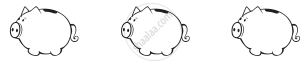
Read the passage three times on your own. Colour a Piggy bank each time you read.
Piggy bank is a coin box used by children. The real use of a piggy bank is to store coins. Piggy banks look like pigs. They come in many shapes and sizes. In Tamil, they are known as Hundial. It is a red, mud pot. We can drop the coins into the pot. Once the pot is full, we must break the pot and use the coins. Start saving with your hundial today!
What did Bala teach Nithin?
Write the word with same meaning.

purse- ______
Match the words with similar meaning.
| truck | subway |
| underground | lorry |
| tap | wallet |
| purse | faucet |
Being a bachelor, the stranger had no patience with children.
