Advertisements
Advertisements
प्रश्न
Show that the function given by f(x) = sin x is
- strictly increasing in `(0, pi/2)`
- strictly decreasing in `(pi/2, pi)`
- neither increasing nor decreasing in (0, π)
Advertisements
उत्तर
The given function is f(x) = sin x.
f'(x) = cos x
a. Since for each `x in (0, pi/2)`, cos x > 0, we have f'(x) > 0
Hence, f is strictly increasing in `(0. pi/2)`
b. Since for each `x in (pi/2 , pi), cos x < 0` we have f'(x) < 0
Hence, f is strictly decreasing in `(pi/2, pi)`
c. From the results obtained in (a) and (b), it is clear that f is neither increasing nor decreasing in (0, π).
APPEARS IN
संबंधित प्रश्न
Prove that the function given by f (x) = x3 – 3x2 + 3x – 100 is increasing in R.
Show that the function f(x) = 4x3 - 18x2 + 27x - 7 is always increasing on R.
Without using the derivative show that the function f (x) = 7x − 3 is strictly increasing function on R ?
Find the interval in which the following function are increasing or decreasing f(x) = 6 − 9x − x2 ?
Find the interval in which the following function are increasing or decreasing f(x) = 8 + 36x + 3x2 − 2x3 ?
Find the interval in which the following function are increasing or decreasing f(x) = 2x3 + 9x2 + 12x + 20 ?
Find the interval in which the following function are increasing or decreasing f(x) = 2x3 − 24x + 107 ?
Find the intervals in which f(x) = sin x − cos x, where 0 < x < 2π is increasing or decreasing ?
Show that f(x) = tan−1 (sin x + cos x) is a decreasing function on the interval (π/4, π/2) ?
Find the intervals in which f(x) = log (1 + x) −\[\frac{x}{1 + x}\] is increasing or decreasing ?
Find the intervals in which f(x) = (x + 2) e−x is increasing or decreasing ?
Prove that the following function is increasing on R f \[f\left( x \right) = 4 x^3 - 18 x^2 + 27x - 27\] ?
Find the values of b for which the function f(x) = sin x − bx + c is a decreasing function on R ?
Let f defined on [0, 1] be twice differentiable such that | f (x) | ≤ 1 for all x ∈ [0, 1]. If f(0) = f(1), then show that | f'(x) | < 1 for all x ∈ [ 0, 1] ?
The interval of increase of the function f(x) = x − ex + tan (2π/7) is
The function f(x) = 2 log (x − 2) − x2 + 4x + 1 increases on the interval
The function \[f\left( x \right) = \log_e \left( x^3 + \sqrt{x^6 + 1} \right)\] is of the following types:
The price P for demand D is given as P = 183 + 120 D – 3D2.
Find D for which the price is increasing.
The consumption expenditure Ec of a person with the income x. is given by Ec = 0.0006x2 + 0.003x. Find MPC, MPS, APC and APS when the income x = 200.
Show that f(x) = cos x is a decreasing function on (0, π), increasing in (−π, 0) and neither increasing nor decreasing in (−π, π).
Find the values of x for which the following functions are strictly increasing:
f(x) = 3 + 3x – 3x2 + x3
Find the value of x, such that f(x) is increasing function.
f(x) = 2x3 - 15x2 + 36x + 1
Find the value of x such that f(x) is decreasing function.
f(x) = x4 − 2x3 + 1
For manufacturing x units, labour cost is 150 – 54x and processing cost is x2. Price of each unit is p = 10800 – 4x2. Find the values of x for which Revenue is increasing.
Prove that function f(x) = `x - 1/x`, x ∈ R and x ≠ 0 is increasing function
Test whether the function f(x) = x3 + 6x2 + 12x − 5 is increasing or decreasing for all x ∈ R
Find the values of x for which the function f(x) = 2x3 – 6x2 + 6x + 24 is strictly increasing
Find the values of x, for which the function f(x) = x3 + 12x2 + 36𝑥 + 6 is monotonically decreasing
State whether the following statement is True or False:
If the function f(x) = x2 + 2x – 5 is an increasing function, then x < – 1
Find the values of x such that f(x) = 2x3 – 15x2 – 144x – 7 is decreasing function
Prove that the function f(x) = tanx – 4x is strictly decreasing on `((-pi)/3, pi/3)`
In `(0, pi/2),` the function f (x) = `"x"/"sin x"` is ____________.
`"f"("x") = (("e"^(2"x") - 1)/("e"^(2"x") + 1))` is ____________.
Which of the following graph represent the strictly increasing function.
If f(x) = `x/(x^2 + 1)` is increasing function then the value of x lies in ______.
Read the following passage:
|
The use of electric vehicles will curb air pollution in the long run. V(t) = `1/5 t^3 - 5/2 t^2 + 25t - 2` where t represents the time and t = 1, 2, 3, ...... corresponds to years 2001, 2002, 2003, ...... respectively. |
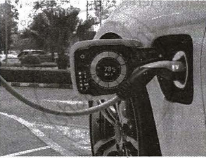
Based on the above information, answer the following questions:
- Can the above function be used to estimate number of vehicles in the year 2000? Justify. (2)
- Prove that the function V(t) is an increasing function. (2)
For \[f(x)=4x^3-6x^2-72x+30\], on which intervals is \[f\] increasing?
Which statement about \[f'(x)=0\] and constant behaviour is correct?
