Advertisements
Advertisements
प्रश्न
Mark the correct increasing order of reactivity of the following compounds with HBr/HCl.
| (a) | 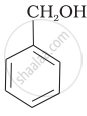 |
| (b) |  |
| (c) | 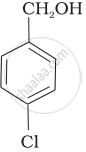 |
पर्याय
a < b < c
b < a < c
b < c < a
c < b < a
Advertisements
उत्तर
b < c < a
Explanation:
It is type of nucleophilic substitution reaction followed by SN1 mechanism. SN1 mechanism depends on the stability of carbonation. Presence of electron-withdrawing group will decrease the stability of carbocation.
APPEARS IN
संबंधित प्रश्न
Give the equation of the following reaction:
Dilute HNO3 with phenol.
Write the mechanism of acid-catalysed dehydration of ethanol to yield ethene.
Name the reagent used in the following reaction:
Oxidation of a primary alcohol to aldehyde.
Name the reagent used in the following reaction:
Benzyl alcohol to benzoic acid.
Write the mechanism (using curved arrow notation) of the following reaction :

Lucas reagent is ____________.
Lucas test is used for the detection of _____________.
The compound which reacts fastest with Lucas reagent at room temperature is:
Lucas test is done to differentiate between ____________.
Which one of the following on oxidation gives a ketone?
During dehydration of alcohols to alkenes by heating with cone. H2SO4 the initial step is ____________.
The process of converting alkyl halides into alcohols involves ______.
Why is the C – O – H bond angle in alcohols slightly less than the tetrahedral angle whereas the C – O – C bond angle in ether is slightly greater?
Assertion: Bond angle in ethers is slightly less than the tetrahedral angle.
Reason: There is a repulsion between the two bulky (–R) groups.
What happens when (CH3)3 C – OH is heated with Cu/573 K?
Write the chemical equation in support of your answer.
Write the mechanism of acid-catalysed dehydration of ethanol to yield ethene.
Write the mechanism of acid dehydration of ethanol to yield ethene.
Write the mechanism of acid-catalysed dehydration of ethanol to yield ethene.
Write the mechanism of acid dehydration of ethanol to yield ethene.
