Advertisements
Advertisements
प्रश्न
"Issues of caste discrimination began to be written about in many printed tracts and essays in India in the late nineteenth century." Support the statement with two suitable examples.
Advertisements
उत्तर
Jyotiba Phule was the Maratha leader of ‘low caste’ protest movements. He wrote about the inequalities of the caste system in his work called Gulamgiri in 1871.
E.V. Ramaswamy Naicker and B.R. Ambedkar wrote about caste-based discrimination in society. Their works were popular all over the country.
Regional protest movements and parties also published many periodicals and articles condemning the religious writings and foreseeing a new outlook.
Kashibaba, a millworker in Kanpur authored Chhote Aur Bade Ka Sawal in 1938 to show the relations between class and caste mistreatment.
Cotton mill workers of Bangalore started libraries to educate themselves in 1930; the same was first initiated by the Bombay mill workers.
संबंधित प्रश्न
In a triangle locate a point in its interior which is equidistant from all the sides of the triangle.
Name the greatest and the smallest sides in the following triangles:
ΔABC, ∠ = 56°, ∠B = 64° and ∠C = 60°.
Arrange the sides of the following triangles in an ascending order:
ΔABC, ∠A = 45°, ∠B = 65°.
Arrange the sides of the following triangles in an ascending order:
ΔDEF, ∠D = 38°, ∠E = 58°.
In a triangle ABC, BC = AC and ∠ A = 35°. Which is the smallest side of the triangle?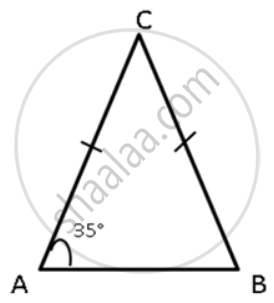
ΔABC is isosceles with AB = AC. If BC is extended to D, then prove that AD > AB.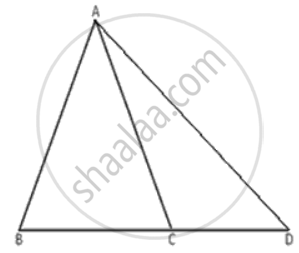
In ABC, P, Q and R are points on AB, BC and AC respectively. Prove that AB + BC + AC > PQ + QR + PR.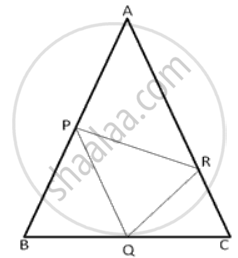
ABCD is a trapezium. Prove that: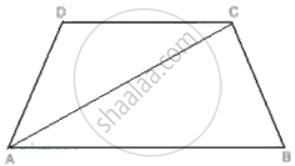
CD + DA + AB + BC > 2AC.
In the given figure, ∠QPR = 50° and ∠PQR = 60°. Show that: SN < SR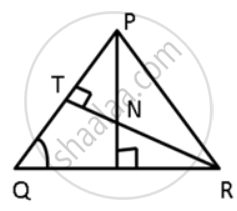
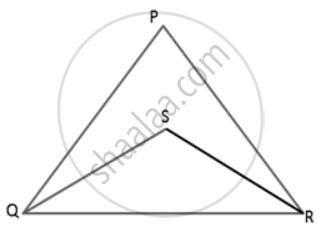
In ΔPQR is a triangle and S is any point in its interior. Prove that SQ + SR < PQ + PR.