Advertisements
Advertisements
प्रश्न
Give the equation of the following reaction:
Oxidation of propan-1-ol with alkaline KMnO4 solution.
Advertisements
उत्तर
\[\ce{\underset{propan-1-ol}{CH3CH2CH2OH} + 2[O] ->[Alkaline KMnO4][Oxidation] \underset{Propanoic acid}{CH3CH2COOH} + H2O}\]
APPEARS IN
संबंधित प्रश्न
Give reasons for the following:
o-nitrophenol is more acidic than o-methoxyphenol.
Write the mechanism of the following reaction :

Show how will you synthesize pentan-1-ol using a suitable alkyl halide.
Give the equation of the following reaction:
Treating phenol with chloroform in the presence of aqueous NaOH.
Which of the following are used to convert RCHO into RCH2OH?
(i) H2/Pd
(ii) LiAlH4
(iii) NaBH4
(iv) Reaction with RMgX followed by hydrolysis
Dehydration of 2-butanol yields:
The compound which gives the most stable carbonium ion on dehydration is:
During dehydration of alcohols to alkenes by heating with cone. H2SO4 the initial step is ____________.
Identify the secondary alcohols from the following set:
- \[\ce{CH3CH2CH(OH)CH3}\]
- \[\ce{(C2H5)3COH}\]
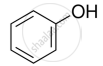

The process of converting alkyl halides into alcohols involves ______.
Assertion: Bond angle in ethers is slightly less than the tetrahedral angle.
Reason: There is a repulsion between the two bulky (–R) groups.
What happens when (CH3)3 C – OH is heated with Cu/573 K?
Write the chemical equation in support of your answer.
Write the mechanism of acid dehydration of ethanol to yield ethene.
Write the mechanism of acid dehydration of ethanol to yield ethene.
Write the mechanism of acid dehydration of ethanol to yield ethene.
Write the mechanism of acid dehydration of ethanol to yield ethene.
Write the mechanism of acid-catalysed dehydration of ethanol to yield ethene.
