Advertisements
Advertisements
प्रश्न
Find the values of x for `y = [x(x - 2)]^2` is an increasing function.
Advertisements
उत्तर
We know, y = [x (x – 2)]² = x² (x + 4 – 4x)
= x4 – 4x3 + 4x2
On differentiating with respect to x,
`dy/dx` = 4x2 - 12x2 + 8x
= 4x (x2 - 3x + 2)
= 4x ( x - 1) (x - 2)
`dy/dx` = 0
`=>` 4x ( x - 1) (x - 2) = 0
`therefore` x = 0, 1, 2
∴ Four parts of real number line from x = 0, x = 1, x = 2 are intervals.
(`- infty`, 0), (0, 1), (1, 2), (2, 2) are formed.
| Interval | (∞, 0) | (0, 1) | (1, 2) | (2, ∞) |
| Sign of x | -ve | +ve | +ve | +ve |
| sign of (x - 1) | -ve | - ve | +ve | +ve |
| sign of (x - 2) | -ve | - ve | -ve | +ve |
| sign of `dy/dx` | -ve | +ve | -ve | +ve |
| nature of function | decreasing | increasing | decreasing | increasing |
∴ y is an increasing function in (0, 1) ∪ (2, ∞)
APPEARS IN
संबंधित प्रश्न
Find the intervals in which the function f given by f(x) = 2x2 − 3x is
- strictly increasing
- strictly decreasing
Prove that the function f given by f(x) = log cos x is strictly decreasing on `(0, pi/2)` and strictly increasing on `((3pi)/2, 2pi).`
Find the interval in which the following function are increasing or decreasing f(x) = 5 + 36x + 3x2 − 2x3 ?
Find the interval in which the following function are increasing or decreasing f(x) = x3 − 6x2 − 36x + 2 ?
Find the interval in which the following function are increasing or decreasing f(x) = 6 + 12x + 3x2 − 2x3 ?
Find the interval in which the following function are increasing or decreasing f(x) = 2x3 − 24x + 107 ?
Determine the values of x for which the function f(x) = x2 − 6x + 9 is increasing or decreasing. Also, find the coordinates of the point on the curve y = x2 − 6x + 9 where the normal is parallel to the line y = x + 5 ?
Show that f(x) = loga x, 0 < a < 1 is a decreasing function for all x > 0 ?
Show that f(x) = sin x − cos x is an increasing function on (−π/4, π/4)?
Find the intervals in which f(x) = log (1 + x) −\[\frac{x}{1 + x}\] is increasing or decreasing ?
Find the interval in which f(x) is increasing or decreasing f(x) = sinx(1 + cosx), 0 < x < \[\frac{\pi}{2}\] ?
What are the values of 'a' for which f(x) = ax is decreasing on R ?
Find 'a' for which f(x) = a (x + sin x) + a is increasing on R ?
Write the interval in which f(x) = sin x + cos x, x ∈ [0, π/2] is increasing ?
Write the set of values of a for which f(x) = cos x + a2 x + b is strictly increasing on R ?
The interval of increase of the function f(x) = x − ex + tan (2π/7) is
The function f(x) = 2 log (x − 2) − x2 + 4x + 1 increases on the interval
If the function f(x) = x3 − 9kx2 + 27x + 30 is increasing on R, then
Show that f(x) = cos x is a decreasing function on (0, π), increasing in (−π, 0) and neither increasing nor decreasing in (−π, π).
Test whether the following functions are increasing or decreasing: f(x) = `x-(1)/x`, x ∈ R, x ≠ 0.
Find the values of x for which the following functions are strictly increasing : f(x) = 2x3 – 3x2 – 12x + 6
Find the values of x for which the following functions are strictly decreasing:
f(x) = 2x3 – 3x2 – 12x + 6
Find the values of x for which the function f(x) = x3 – 12x2 – 144x + 13 (a) increasing (b) decreasing
Find the values of x for which f(x) = `x/(x^2 + 1)` is (a) strictly increasing (b) decreasing.
Show that f(x) = x – cos x is increasing for all x.
Show that y = `log (1 + x) – (2x)/(2 + x), x > - 1` is an increasing function on its domain.
Find the value of x, such that f(x) is increasing function.
f(x) = x2 + 2x - 5
Show that the function f(x) = x3 + 10x + 7 for x ∈ R is strictly increasing
Find the values of x for which the function f(x) = x3 – 6x2 – 36x + 7 is strictly increasing
Find the values of x, for which the function f(x) = x3 + 12x2 + 36𝑥 + 6 is monotonically decreasing
The function f(x) = x3 - 3x is ______.
The function f(x) = sin x + 2x is ______
For which interval the given function f(x) = 2x3 – 9x2 + 12x + 7 is increasing?
The function `1/(1 + x^2)` is increasing in the interval ______
The function f(x) = x2 – 2x is increasing in the interval ____________.
Which of the following graph represent the strictly increasing function.
Read the following passage:
|
The use of electric vehicles will curb air pollution in the long run. V(t) = `1/5 t^3 - 5/2 t^2 + 25t - 2` where t represents the time and t = 1, 2, 3, ...... corresponds to years 2001, 2002, 2003, ...... respectively. |
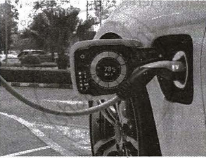
Based on the above information, answer the following questions:
- Can the above function be used to estimate number of vehicles in the year 2000? Justify. (2)
- Prove that the function V(t) is an increasing function. (2)
Find the interval/s in which the function f : R `rightarrow` R defined by f(x) = xex, is increasing.
As one moves from left to right on a graph, what does a decrease in the \[y\]-values indicate?
